Albuminuria: What It Means, Why It Matters, and What You Can Do
When your kidneys are working right, they keep albumin, a key protein that helps maintain fluid balance in your blood where it belongs—inside your bloodstream. But if albumin shows up in your urine, that’s a red flag. This condition is called albuminuria, the presence of abnormal amounts of albumin in the urine, often an early sign of kidney damage. It’s not a disease itself, but a warning sign that something’s wrong with how your kidneys filter blood. Many people don’t feel anything at first, which is why it’s often caught only during routine urine tests.
Albuminuria is most commonly linked to chronic kidney disease, a gradual loss of kidney function over time, often caused by diabetes or high blood pressure. In fact, if you have diabetes or high blood pressure, albuminuria is one of the first clues your kidneys are under stress. It’s also seen in people with heart disease, obesity, or autoimmune conditions. Even if your blood pressure and sugar levels seem fine, persistent albuminuria means your kidneys aren’t filtering properly—and that puts you at higher risk for kidney failure down the road. The good news? Catching it early gives you a real shot at slowing or stopping the damage.
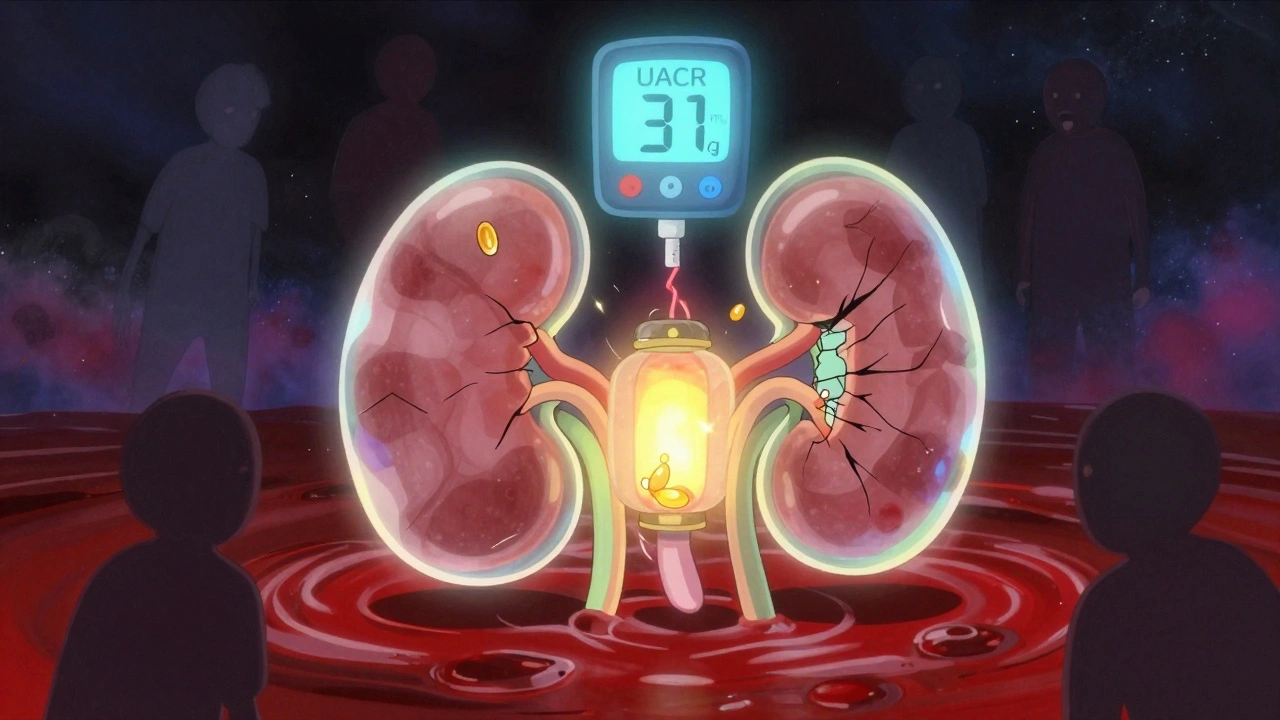
Doctors test for it using a simple urine sample. A dipstick test gives a quick read, but the real gold standard is the albumin-to-creatinine ratio (ACR). This number tells them exactly how much albumin is leaking out compared to waste products. A result over 30 mg/g is considered abnormal. If it’s high, they’ll likely repeat the test over a few months to confirm it’s not just a one-time spike from dehydration, infection, or intense exercise. Once confirmed, treatment focuses on the root cause: controlling blood pressure with ACE inhibitors or ARBs, managing blood sugar if you’re diabetic, cutting back on salt, and avoiding NSAIDs like ibuprofen that can hurt your kidneys further.
You won’t always feel albuminuria coming. No swelling, no pain, no obvious symptoms—until it’s advanced. That’s why people with risk factors should get tested regularly. If you’ve been told your kidneys are fine but your urine test showed albumin, don’t brush it off. It’s not normal. And if you’re already managing diabetes or high blood pressure, this is the one test that tells you whether your treatment is actually protecting your kidneys. The posts below cover everything from how urine tests work, to what happens when kidneys fail, to how medications like statins and ACE inhibitors affect kidney health. You’ll find real, practical info on what to ask your doctor, what to watch for, and how to act before it’s too late.