
Why Your Pharmacist Is Your First Line of Defense
When you walk into a pharmacy, it's easy to think the pharmacist is just there to hand over a box and take your money. That's a dangerous assumption. In reality, your pharmacist is a highly trained medication expert who stands between you and potential health risks. They are often the most accessible healthcare professionals you have. Whether you are in Melbourne, London, or New York, community pharmacies are designed to be your local health hub.
Pharmacist is a healthcare professional specialized in the preparation and dispensing of medications, ensuring safe and effective use of drugs. They don't just count pills; they review your entire health profile. Research consistently shows that pharmacist interventions significantly reduce hospital admissions and emergency department visits. Yet, many patients leave the counter without asking a single question. This gap in communication is where medication errors often hide.
Why does this matter? Because medication safety isn't just about taking the right pill; it's about understanding how that pill fits into your life. A study published in the Journal of the American Pharmacists Association found that pharmacist interventions can reduce hospital admissions by 27%. That's a massive number. It means a simple conversation at the counter can prevent a trip to the hospital. If you are managing chronic conditions or taking multiple prescriptions, that conversation becomes even more critical.
The Seven Essential Categories of Questions
Walking into a consultation room or standing at the counter can feel intimidating. You might worry you're wasting their time. You aren't. Pharmacists expect these questions. To make it easier, think of your questions falling into seven distinct buckets. This structure ensures you cover the basics without getting overwhelmed.
1. Medication Purpose and Expectations
The most fundamental question you can ask is: "What is this medication for, and how will it help me?" It sounds obvious, but studies indicate that nearly 30% of medication errors happen because patients simply don't understand what they are taking. If your doctor prescribed it in a rush, you might not have caught the details. Your pharmacist can explain the mechanism in plain language. Do not leave the pharmacy until you can articulate the purpose of the drug in your own words.
2. Administration Instructions
Timing and method matter more than you might think. Ask specifically: "Should I take this with or without food?" Some medications need an empty stomach to work, while others cause nausea if you don't have a meal. Ask about the time of day. Some drugs cause drowsiness and should be taken at night, while others need to be taken in the morning to match your body's natural rhythms. Also, inquire about activities to avoid. For example, certain medications increase sun sensitivity, which is crucial information if you live in a sunny climate like ours in Australia.
3. Side Effect Management
Everyone worries about side effects. Instead of fearing them, ask: "What are the most common side effects, and which ones require immediate medical attention?" There is a big difference between a mild headache and a sign of an allergic reaction. Your pharmacist can help you distinguish between the two. They can also offer practical tips on how to manage expected side effects, such as taking a pill with a full glass of water to reduce stomach upset.
4. Medication Interactions
This is arguably the most critical category. You must ask: "Does this interact with my other medications, supplements, or foods?" It's not just about prescription drugs. Over-the-counter painkillers, herbal supplements like St. John's Wort, and even grapefruit juice can interfere with how your medication works. The FDA reports that a significant percentage of hospital admissions result from adverse drug interactions that could have been prevented. Your pharmacist has access to a database that flags these interactions instantly.
5. Adherence and Practical Management
Life gets busy. Ask: "What should I do if I miss a dose?" The answer isn't always "take it as soon as you remember." Sometimes, doubling up is dangerous. Also, ask about cost-saving options. In Australia, this might mean checking if the medication is on the Pharmaceutical Benefits Scheme (PBS) is a Australian government subsidy scheme that reduces the cost of prescription medicines for eligible patients. Understanding your subsidy status can save you hundreds of dollars a year.
6. Monitoring and Effectiveness
You need to know when to expect results. Ask: "When will I notice improvement, and will I need tests to monitor effectiveness?" Some medications work in hours, while others take weeks. If you don't feel better after the expected time, you need to know whether to wait or call your doctor. For medications like blood thinners or cholesterol drugs, regular blood tests are often required to ensure safety.
7. Alternatives and Additional Information
Finally, ask: "Is there a generic version available, and where can I find reliable information?" Brand-name drugs often cost significantly more than generics, yet they provide identical therapeutic effects. Pharmacists can switch to a generic version if your doctor approves, saving you money. They can also point you to trustworthy resources, steering you away from unreliable internet forums.
Preparing for Your Pharmacy Consultation
Even with the right questions, a rushed consultation can lead to missed information. The average interaction time at a busy community pharmacy is often short. To maximize this time, preparation is key. Bring a complete list of everything you take. This includes prescription drugs, over-the-counter medications, vitamins, and herbal supplements. Many patients forget to mention their daily multivitamin or the occasional painkiller, but these count.
Consider using a standardized form like the 'My Medicine Record' often recommended by health authorities. It captures essential data points that help your pharmacist see the full picture. Also, timing matters. If you pick up your medication during a quiet time, you are more likely to get a few extra minutes for questions. Avoid the lunch rush if you can.
Communication Techniques That Work
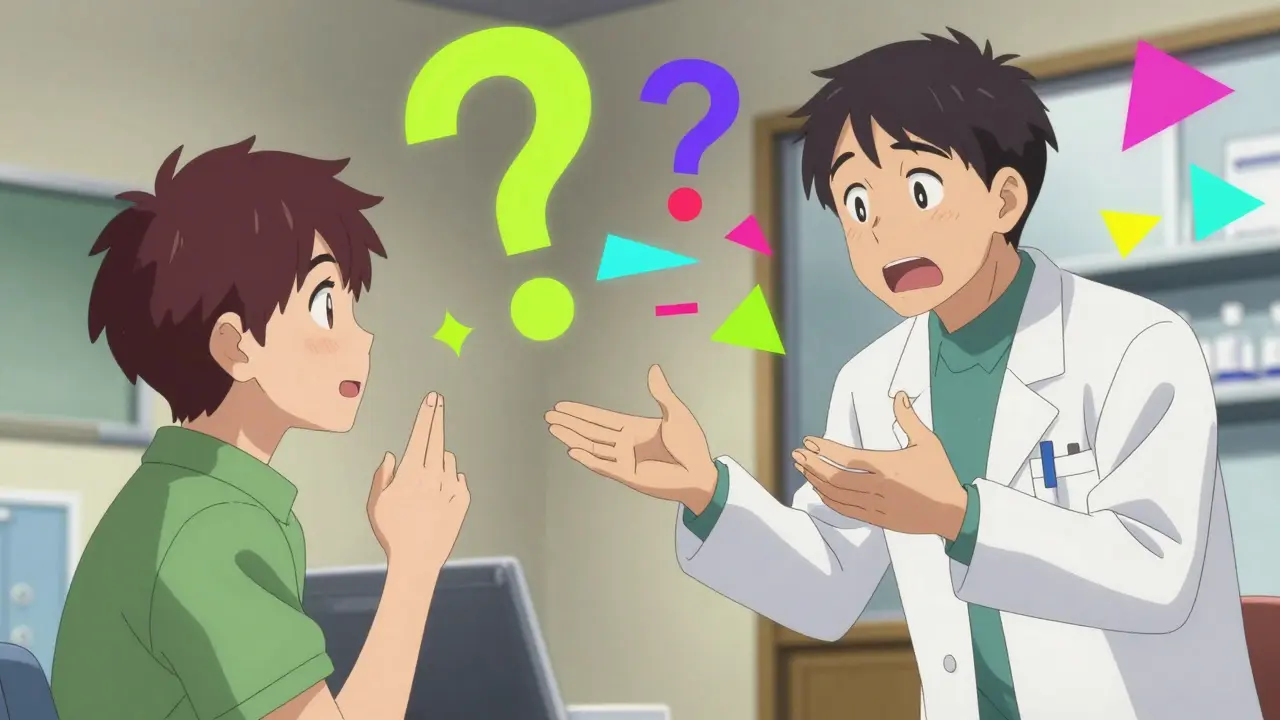
Health literacy can be a barrier. If you don't understand medical jargon, you might nod along and leave confused. A powerful technique is the Teach-Back Method is a communication strategy where patients explain instructions in their own words to confirm understanding. Ask the pharmacist to explain the instructions, and then repeat them back to them. Say, "So, just to make sure I have this right, I take this pill with breakfast every morning, correct?" This simple step increases adherence by 40% according to research published in JAMA Internal Medicine. It ensures that what you heard matches what they said.
Don't be afraid to ask for clarification. If they use a term you don't know, stop them and ask for a simpler explanation. A study from the University of Michigan found that patients who ask at least three specific questions experience 65% fewer medication-related problems. Three questions is a great target to aim for.
Cost and Accessibility Considerations
Medication costs can add up quickly. In Australia, the PBS Safety Net helps reduce costs once you reach a certain threshold, but you need to know how to apply it. Ask your pharmacist about cost-saving options upfront. Are there generic versions? Are there alternative brands that are covered by your private health insurance? Sometimes, a different formulation of the same drug is cheaper and works just as well.
Accessibility is another factor. If you live in a rural area, you might face pharmacist shortages. Telepharmacy services have expanded to bridge this gap, allowing you to consult with a pharmacist virtually. If you cannot get to a physical pharmacy easily, ask about these virtual options. They can review your medications and answer questions without you needing to travel.

When to Seek Help Immediately
Knowing when to act is just as important as knowing what to ask. If you experience severe side effects like difficulty breathing, swelling of the face or throat, or severe rash, do not wait for a consultation. Seek emergency medical attention immediately. Your pharmacist can help you identify these warning signs beforehand. They can also guide you on who to call if you have questions outside of business hours.
Can I ask my pharmacist about over-the-counter medications?
Yes, absolutely. Pharmacists are experts in both prescription and over-the-counter medications. They can check for interactions between your prescribed drugs and any supplements or painkillers you buy off the shelf.
Is there a cost for consulting with a pharmacist?
In many community pharmacies, basic consultations are free. However, comprehensive medication reviews or specific clinical services may have a fee, which can sometimes be covered by health insurance or government schemes.
What if I don't understand the pharmacist's instructions?
Use the teach-back method. Repeat the instructions in your own words to confirm understanding. If you are still unsure, ask them to explain it differently or provide written materials.
Do I need to tell the pharmacist about my herbal supplements?
Yes, this is crucial. Herbal supplements like St. John's Wort or Ginkgo Biloba can interact with prescription medications, altering their effectiveness or causing dangerous side effects.
How often should I review my medications with a pharmacist?
It is recommended to review your medications at least once a year, or whenever a new prescription is added. This helps prevent duplicate therapies and ensures your treatment plan remains effective.
Can pharmacists change my prescription dose?
Generally, pharmacists cannot change the dose prescribed by a doctor without authorization. However, they can contact the doctor to request a change if they identify a safety issue or a better alternative.
What is Medication Therapy Management (MTM)?
MTM is a service where a pharmacist reviews all your medications to optimize outcomes and prevent problems. It is often available for patients with chronic conditions or those taking multiple medications.
Should I bring my old medication bottles to the pharmacy?
Yes, bringing your old bottles can help the pharmacist verify the exact medication and dosage you have been taking, ensuring continuity of care and preventing errors.
Next Steps for Better Medication Safety
Improving your medication safety starts with a single conversation. Next time you pick up a prescription, take a deep breath and prepare your list of questions. Remember, your pharmacist is there to help, not to judge. They want you to stay healthy and avoid unnecessary complications. By asking the right questions, you take control of your health journey.
Keep a medication diary or use a mobile app to track your doses and any side effects you experience. This information is gold for your pharmacist and your doctor during follow-up visits. If you notice something doesn't feel right, speak up immediately. Your health is too important to leave to chance.
Darlene Gomez
March 26, 2026 AT 12:11It is really heartening to see people taking ownership of their health like this. We often walk past the counter without thinking twice about the expertise sitting right there. I have seen friends get confused by dosage instructions and end up feeling worse than before. Asking questions empowers you to be part of the solution. It builds a partnership between the patient and the professional. Safety really does start with communication at the pharmacy. I always make sure to ask about food interactions before I leave. It saves so much hassle later on when side effects might show up. Everyone deserves to feel confident about what they put into their body. This guide breaks it down perfectly for anyone feeling overwhelmed. We should all normalize these conversations to keep our communities healthy. It is a small step that makes a massive difference in the long run.
Jacob Hessler
March 27, 2026 AT 09:54pharmas just want ur money bro. they dont care about u really. its all about the profit margins and keeping u coming back. why trust them when they work for the big corp. i dont see them helping poor folks much. its a scam most of the time. just read the label and go home. dont waste time talking to them. they are paid to sell not to help. keep it simple and save your time.
J. Murphy
March 28, 2026 AT 15:47nah you are wrong about that. i have seen them save lives plenty of times. maybe you just had bad luck with one place. do not generalize all of them like that. it is not fair to the ones trying hard. they do check for interactions for free. you should try being less cynical about it. life is too short to be this angry all the time. just give them a chance next time. maybe you will change your mind.
Alex Arcilla
March 28, 2026 AT 20:52oh great another article telling us how to be good patients. like we dont know we need to ask questions already. its so obvious but people still mess it up. i guess some folks need a checklist to survive a trip to the drug store. i laughed at the part about grapefruit juice. no one actually eats that with meds anyway. it is funny how specific the advice gets sometimes. still might be useful for the clueless ones out there. just dont take it too seriously if you know your stuff. we are all just trying to get by in this mess. sarcasm aside it is good info i suppose. thanks for the read i guess.
Grace Kusta Nasralla
March 30, 2026 AT 16:09The human body is a vessel for so much more than just chemical reactions. We often forget the spirit behind the prescription. It is not just about the pill in the bottle. There is a deeper connection we miss. I feel like the system tries to numb us. But the pharmacist sees the whole picture. They hold the key to our safety. Sometimes I wonder if we listen enough. The silence in the pharmacy is heavy. It speaks volumes about our health. We need to embrace the conversation. It changes everything for the better. Trust is a fragile thing to build. Yet it is necessary for healing. We must find the balance in this care.
Korn Deno
April 1, 2026 AT 05:43medicine is a tool we use to navigate life. the way we use it defines our journey. many people ignore the manual and just take the pill. this leads to unnecessary suffering and confusion. understanding the mechanism helps align your expectations. it is a partnership between knowledge and action. we should treat our health with the respect it deserves. ignoring the advice is a path to regret. listening is an act of self care. the pharmacist is a guide in this process. we must value their input to stay safe. knowledge is power in the medical field. use it wisely to protect yourself.
Pat Fur
April 2, 2026 AT 16:18Totally agree with the sarcasm there.
Anil Arekar
April 2, 2026 AT 20:18It is imperative that individuals engage with their healthcare providers proactively. The information provided in this article is highly beneficial for public health. One must consider the potential interactions between various substances carefully. Adherence to medical advice ensures optimal therapeutic outcomes for patients. The pharmacist serves as a crucial resource in the modern healthcare landscape. Ignoring their expertise can lead to significant adverse events. We should all strive to maintain open lines of communication. This approach fosters a culture of safety and trust within the community. Education regarding medication management is essential for everyone. Proper utilization of these services reduces the burden on hospitals. It is a collective responsibility to prioritize our well-being. Thank you for sharing this comprehensive guide with us.
Elaine Parra
April 3, 2026 AT 14:23Stop sounding like a robot from a government pamphlet. Nobody cares about your formal language here. You are making it sound way more complicated than it is. Just ask the person at the counter what you need. Do not try to impress anyone with big words. It is annoying to read all this fluff. People just want to know if they will get sick. Keep it real and stop preaching to us. You are acting like you know everything already. We are trying to have a normal conversation here. Get over yourself and just read the post. Your tone is completely off for this platform.
Natasha Rodríguez Lara
April 3, 2026 AT 23:08It is wonderful to see so many perspectives on this topic today. We all bring different experiences to the table regarding health care. Collaboration between patients and providers is key to success. I believe we can learn a lot from each other in this thread. Safety is a shared goal that we all want to achieve. Taking the time to ask questions shows respect for the process. It also shows respect for the people working in the pharmacy. We should encourage others to feel comfortable speaking up. A healthy community depends on open and honest dialogue. Let us all support each other in making better choices. This is how we build a stronger foundation for our future.