After a kidney transplant, the biggest threat isn't rejection-it's infection. You're on powerful drugs to keep your new kidney safe, but those same drugs make your body defenseless against germs you used to shrug off. Bacteria, viruses, fungi-they all see you as an easy target. The good news? You’re not helpless. With the right plan, most infections can be avoided or caught early. This isn’t about fear. It’s about control.
What Makes You So Vulnerable?
Your immune system was built to fight off invaders. After transplant, doctors suppress it on purpose. Too much activity, and your body attacks the new kidney. Too little, and you can’t fight off a common cold. That balance is fragile. The first three months are the riskiest. That’s when you’re on the highest doses of immunosuppressants. But the danger doesn’t disappear after six months. Some viruses, like CMV, can wake up months later when you stop taking your antiviral. And new threats show up every day-multidrug-resistant bacteria, fungi from soil, even your own gut bacteria turning against you.Prevention Starts Before the Surgery
A lot of this begins before you ever step into the operating room. Your transplant team doesn’t just check your kidney function-they check your whole infection history. They’ll test you for CMV, hepatitis B, tuberculosis, and even chickenpox. If you’ve never had chickenpox or the vaccine, you’ll get it before transplant. If you have latent TB, you’ll get treatment first. Why? Because once you’re immunosuppressed, you can’t get live vaccines anymore. And if you catch chickenpox after transplant, it can be deadly. Your family matters too. If your partner or kids aren’t up to date on flu shots, they could bring home the virus that lands you back in the hospital. That’s why the CDC recommends a "cocooning" strategy-everyone around you gets vaccinated so they don’t become a carrier. Flu, whooping cough, COVID-19, pneumococcal-these aren’t optional. They’re part of your survival plan.Medicines as Shields: Prophylaxis That Actually Works
You won’t get a single pill to prevent everything. You’ll get a schedule. A timeline. A set of rules that change as your body adjusts. For the first 3 to 6 months, almost everyone gets antivirals like valganciclovir to block CMV. This isn’t just a precaution. CMV doesn’t just cause fever and fatigue. It increases your risk of rejection by up to 34% and can destroy your new kidney over time. If your donor was CMV-positive and you were negative (D+/R-), you’re at highest risk. That’s why universal prophylaxis is standard. You’ll also get antibiotics to stop Pneumocystis jirovecii pneumonia-a fungal infection that used to kill half of transplant patients before prophylaxis became routine. Trimethoprim-sulfamethoxazole is the go-to, taken three times a week for at least six months. If you’re allergic, there are alternatives. For herpes viruses like HSV or VZV, acyclovir or valacyclovir is given for the first few months. These aren’t just for outbreaks-they’re preventative. Many patients never even know they had a silent infection because the medicine stopped it cold. And if you have a central line? Daily chlorhexidine baths and special dressings cut bloodstream infections by up to 22%. That’s not magic. That’s science. Hospitals now use chlorhexidine-impregnated dressings on every catheter site because the data is undeniable.
Vaccines After Transplant: What’s Safe and When
You can’t get live vaccines after transplant-no MMR, no varicella, no nasal flu spray. But you can get the inactivated ones. And timing matters. Most vaccines are given starting at six months post-transplant. That’s when your immune system is stable enough to respond, but still protected by prophylaxis. The key ones:- Influenza (injectable only)
- Pneumococcal (PCV20 or PPSV23)
- Hepatitis B (if you didn’t respond before transplant)
- Tdap (tetanus, diphtheria, pertussis)
- COVID-19 (boosters as recommended)
Food, Pets, and the Outside World
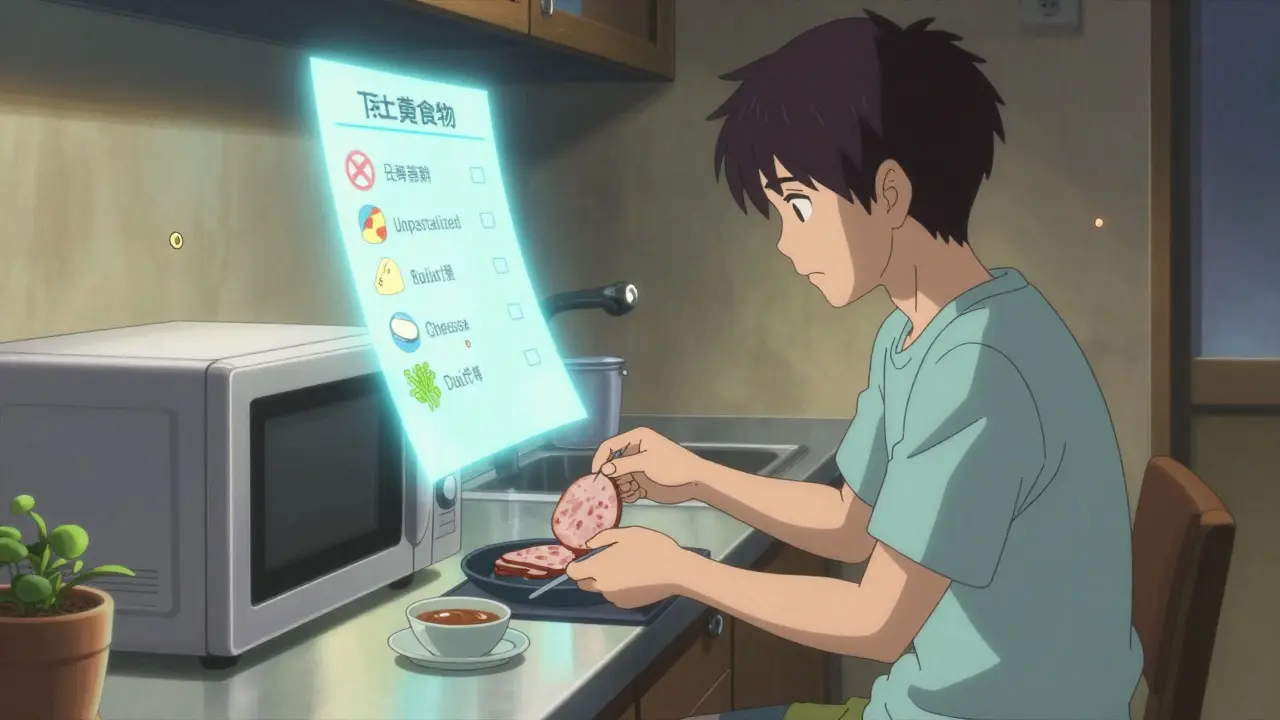
You can still live. But you have to play smart. Raw seafood? Avoid it. Unpasteurized cheese? Skip it. Deli meats? Heat them until steaming. Listeria doesn’t care if you’re healthy-it only cares if you’re immunosuppressed. And it kills. Pets? They’re not the enemy. But they’re not risk-free. Cats can carry toxoplasmosis in their litter. Dogs can bring in dirt with fungi. Wash your hands after petting. Don’t clean the litter box. Don’t handle reptiles or birds. Keep your dog on a leash in parks. Don’t let them lick your face. Environmental risks vary by where you live. In Ohio, soil can carry histoplasmosis. In the Southwest, coccidioidomycosis. Your transplant team will tell you what to watch for in your area. If you’re gardening, wear gloves and a mask. Don’t dig in dry soil. Don’t clean bird cages. Even a walk in the park after rain can stir up spores.
Monitoring: Catching Infections Before They Catch You
You can’t wait for symptoms. By the time you feel sick, it might be too late. CMV is monitored with weekly blood tests for the first few months, then every two weeks. If the virus shows up in your blood-even if you feel fine-you start antivirals immediately. That’s preemptive therapy. It’s not treatment. It’s prevention. For fungal infections, doctors check blood for galactomannan or beta-D-glucan. These are biomarkers that show up before you have a cough or fever. If they’re elevated, you get a CT scan. Early detection saves lives. And if you’ve had antibiotics before transplant, or you’re in a hospital with high rates of drug-resistant bacteria, you’ll get regular stool or nasal swabs to check for colonization. If you’re carrying a superbug like ESBL-producing E. coli, your team will adjust your antibiotics before you even get sick.What’s Next? The Future of Prevention
The future isn’t just more drugs. It’s smarter tools. Fecal microbiota transplants (FMT) are being tested to reset your gut bacteria and crowd out dangerous superbugs. Early results show promise in reducing recurrent C. diff and even preventing colonization by multidrug-resistant organisms. CMV vaccines? They’re in trials. None are approved yet, but if one works, it could change everything. Imagine not needing six months of antivirals. No side effects. No weekly blood tests. Letermovir, a newer antiviral, is being studied for long-term CMV protection beyond 100 days. That’s huge for high-risk patients who relapse after stopping older drugs. And as immunosuppression gets more targeted-drugs that spare some immune cells while blocking others-your infection risk might drop naturally. The goal isn’t to shut down your immune system. It’s to fine-tune it.You’re Not Alone in This
This isn’t a checklist you complete and forget. It’s a lifestyle. Some days, it’s exhausting. You want to hug your grandkid. You want to eat sushi. You want to go to the mall without a mask. But here’s the truth: the people who thrive after transplant aren’t the ones who never get sick. They’re the ones who know the signs. They test early. They call their team at the first fever. They take their pills on time. They wash their hands like their life depends on it-because it does. You’re not breaking rules. You’re building a new normal. One that keeps your new kidney-and your life-safe.Can I get vaccinated right after my kidney transplant?
No. Most vaccines are delayed until at least six months after transplant because your immune system is too suppressed to respond effectively. Live vaccines, like MMR or nasal flu spray, are never given after transplant. Inactivated vaccines, like flu shots and pneumococcal, are safe and recommended starting at six months, but timing and dosage depend on your individual immune status and medication regimen.
Is CMV still a big threat after transplant?
Yes, especially if you’re in the high-risk group (donor positive, recipient negative). Even after stopping antiviral prophylaxis, CMV can reactivate months later. That’s why monitoring with blood tests continues for at least a year. CMV doesn’t just cause illness-it increases rejection risk by 23-34% and can lead to long-term kidney damage. Preventive treatment and early detection are critical.
What foods should I avoid after a kidney transplant?
Avoid raw or undercooked meat, seafood, and eggs. Skip unpasteurized cheeses, raw sprouts, deli meats unless reheated until steaming, and unwashed fruits or vegetables. Listeria and other foodborne pathogens can cause severe illness in immunosuppressed patients. Always wash hands before handling food, and cook everything thoroughly.
Can I have pets after a kidney transplant?
Yes, but with caution. Cats can carry toxoplasmosis in their litter-don’t clean the box. Dogs can track in soil with fungi. Avoid reptiles, birds, and exotic pets. Wash your hands after petting, and don’t let animals lick your face or open wounds. Pets can provide emotional support, but hygiene and boundaries are non-negotiable.
How often do I need blood tests after transplant?
In the first three months, you’ll likely have weekly blood tests to check for CMV, drug levels, and kidney function. After that, it tapers to every two weeks, then monthly. If you’re on preemptive therapy for CMV or have a history of resistant infections, testing may continue longer. Your team will adjust based on your risk profile and how your body responds.
What should I do if I get a fever after transplant?
Call your transplant team immediately-even if you feel fine. A fever in a transplant patient is a medical alert, not a cold. Don’t wait to see if it goes away. Don’t take Tylenol and hope for the best. Infections can spread fast when your immune system is suppressed. Get tested for CMV, bacteria, and fungi right away. Early action saves your kidney.
Adewumi Gbotemi
January 10, 2026 AT 15:58Just got my transplant last year. This post saved my life. I didn't know about the cocooning thing until my sister got her flu shot after reading this. Now my whole family does it. Simple stuff, huge difference.
Priscilla Kraft
January 11, 2026 AT 20:55YES. This is exactly what my transplant nurse said. Handwashing isn't optional-it's your new religion. 🙏 I even wash my hands before touching my own face now. No shame. No exceptions.
Sam Davies
January 13, 2026 AT 07:19Oh wow, so we're supposed to treat our own gut flora like it's a hostile takeover? That's... oddly poetic. I mean, your microbiome is basically a socialist commune that turned fascist after you took tacrolimus. Who knew?
Also, chlorhexidine baths? Sounds like something a sci-fi hospital in 2147 would use. Guess we're all cyborgs now.
Matthew Miller
January 13, 2026 AT 15:37Stop pretending this is about control. It's about surviving a medical system that keeps you on life support while charging you $20k a month for pills. Your 'new normal' is a prison with a kidney. The real threat isn't CMV-it's the fact that your insurance will drop you if you get sick again.
Jason Shriner
January 15, 2026 AT 06:32so like... i just got a kidney and now i have to be afraid of dirt? and pets? and rain? what's next... am i not allowed to breathe?
my grandpa had a transplant in 1992 and he smoked cigars and ate raw oysters. he lived 18 years. so... maybe this is just fear porn?
Sean Feng
January 17, 2026 AT 00:13Why do you need to test for CMV weekly? If you're on valganciclovir it's already blocked. If it's not blocked you're already dead. Why are we doing all this surveillance theater?
Jennifer Littler
January 18, 2026 AT 18:50As a nephrologist, I can confirm: the data on preemptive CMV therapy is rock solid. The 34% rejection increase isn't a guess-it's from multicenter trials. And yes, galactomannan screening for aspergillus in high-risk patients reduces mortality by 40%. This isn't speculation. It's standard of care.
Also, FMT trials are promising but still Phase II. Don't get your hopes up yet.
Alfred Schmidt
January 20, 2026 AT 11:07WHAT ABOUT THE COST?!?!?!?!?!!?!?!
Do you have any idea how much $1200/month for valganciclovir adds up?!?!?!?!?!?!?!?!
And who pays for the blood tests?!?!?!?!?!?!?!?!
My sister got her transplant and now she's bankrupt because of 'precautions'!!!
THIS IS A SYSTEMIC FAILURE!!!
Alex Smith
January 20, 2026 AT 14:27My cousin got her transplant in Chicago. They told her to avoid soil in the winter because of histoplasmosis. She thought they were joking. Then she got sick. Turned out she inhaled spores from a pile of leaves she raked. Now she's on antifungals for life. Don't underestimate the dirt.
Vincent Clarizio
January 21, 2026 AT 06:55Let me tell you about the real tragedy: we're told to live like we're in a biohazard suit, but no one talks about the loneliness. You can't go to your kid's soccer game because the crowd is a germ bomb. You can't hug your mom without risking her getting sick too. You're not just protecting your kidney-you're protecting everyone around you. That's emotional labor no one sees.
And then the doctors say 'just take your meds' like it's that simple. Like the anxiety, the sleepless nights, the constant calculations-none of it matters. You're just a machine that needs oiling.
I miss the days when a fever meant a day off work. Now it means a 3 a.m. ER trip and a 12-hour wait because you're 'high risk'. You're not a patient. You're a liability.
And yes, I know the science. I've read the papers. But science doesn't hug you when you cry because you can't eat pizza with your friends anymore.
This isn't just about infection control. It's about grief. Grief for the life you had. Grief for the life you're not allowed to have. And no pill fixes that.
Michael Patterson
January 21, 2026 AT 19:06Did you know that some transplant patients develop autoimmunity because their immune system gets confused after all that suppression? It's like your body forgets what 'self' is. So now you're fighting yourself. That's the real horror story. Not CMV. Not listeria. The fact that your own cells turned traitor.
And FMT? That's just a fancy way of shoving poop into someone. Why not just drink a cup of your cousin's stool? It's the same thing. Science is just magic with a lab coat.
Roshan Joy
January 23, 2026 AT 01:11From India: we don't have access to all these drugs or tests. But we still survive. We use boiled water, handwashing with soap, avoid street food, and stay away from pigeons. Simple. Effective. No fancy tech needed. Your system is advanced-but we are resilient.
Also, my uncle got a transplant in 2010. He's alive today because his daughter washed his hands every time he came home. Not a single hospital. Just love.
Madhav Malhotra
January 23, 2026 AT 21:26My uncle in Delhi got his transplant and now he grows his own vegetables on the rooftop. No pesticides. No store-bought cheese. He says, 'If I can't trust the world, I'll grow my own safety.' And he's doing great. Sometimes the oldest wisdom is the best.
Christian Basel
January 23, 2026 AT 22:09CMV prophylaxis is overkill. Most patients never get sick. All this testing just makes people paranoid. And the cost? Unacceptable. We're medicalizing normalcy.