Medical Jargon Translator
Select a common clinical term found in medical records to see its "Patient View" translation. This demonstrates the gap between provider labeling and lived experience.
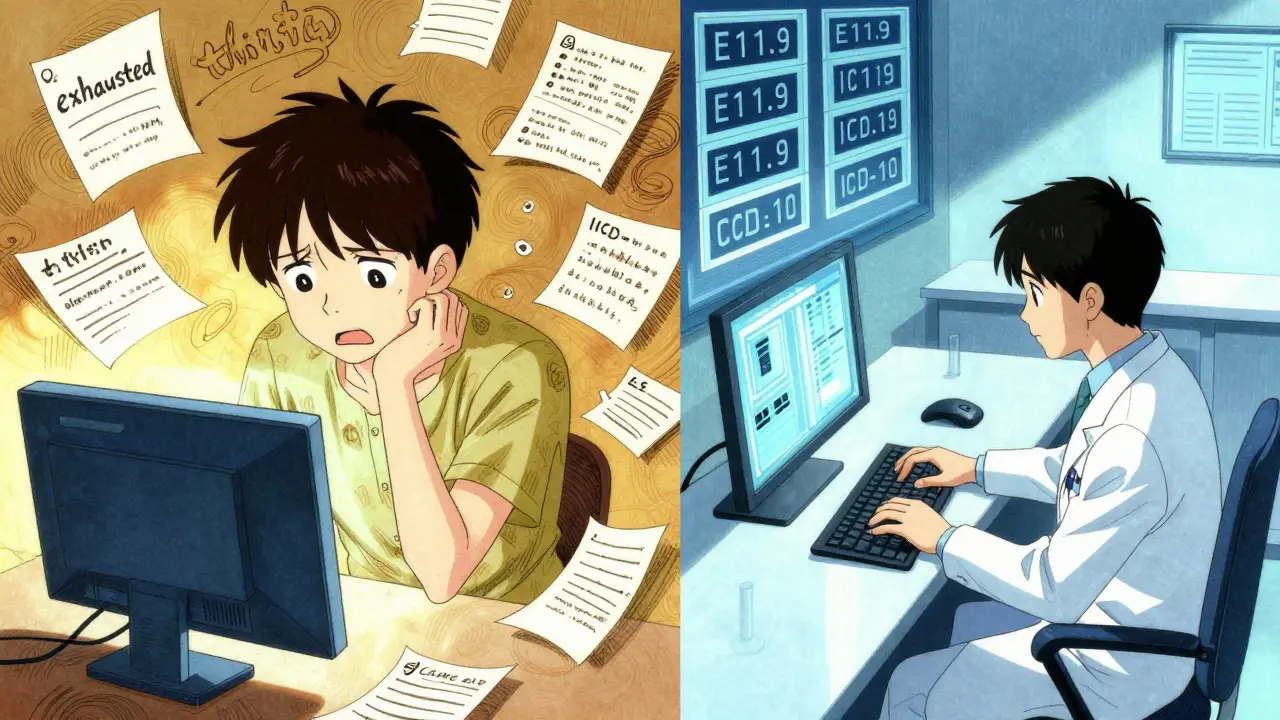
Ever opened your online health portal and felt like you needed a secret decoder ring to understand your own medical records? You aren't alone. There is a massive gap between how a doctor describes your health and how you experience it. While you might describe feeling "exhausted and thirsty," your provider is likely typing in ICD-10 the International Classification of Diseases, 10th Revision, a global system used to categorize every possible diagnosis code E11.9. This isn't just a difference in vocabulary; it's a fundamental split in how health information is labeled and stored.
The Great Divide: Clinical Codes vs. Lived Experience
Healthcare providers operate in a world of precision and billing. To get reimbursed by insurance or the government, they use standardized systems. For instance, they rely on CPT Current Procedural Terminology, a set of codes maintained by the American Medical Association to describe medical, surgical, and diagnostic services codes to document exactly what happened during your visit. These labels are designed for computers and auditors, not for people.
On the other side, patients use "human information." This is the narrative of your illness-the "patient's story." When a patient says they are taking "that white pill with meals," they are describing a lived experience. A provider, however, records "metformin 500mg BID." The problem is that these two ways of labeling the same thing often don't meet in the middle. A study in the Journal of General Internal Medicine found that a staggering 68% of patients misunderstood common medical terms. For example, 61% of people misidentified the word "colitis," and 42% didn't understand "hypertension."
Why This Gap Matters for Your Safety
This isn't just about feeling confused; it's a safety issue. When the labels used by providers don't match the understanding of the patient, mistakes happen. Dr. Thomas Bodenheimer has noted that this language barrier contributes to roughly 30-40% of medication errors. If you don't understand the label on your chart, you might not realize a medication dose is wrong or that a critical symptom is being ignored.
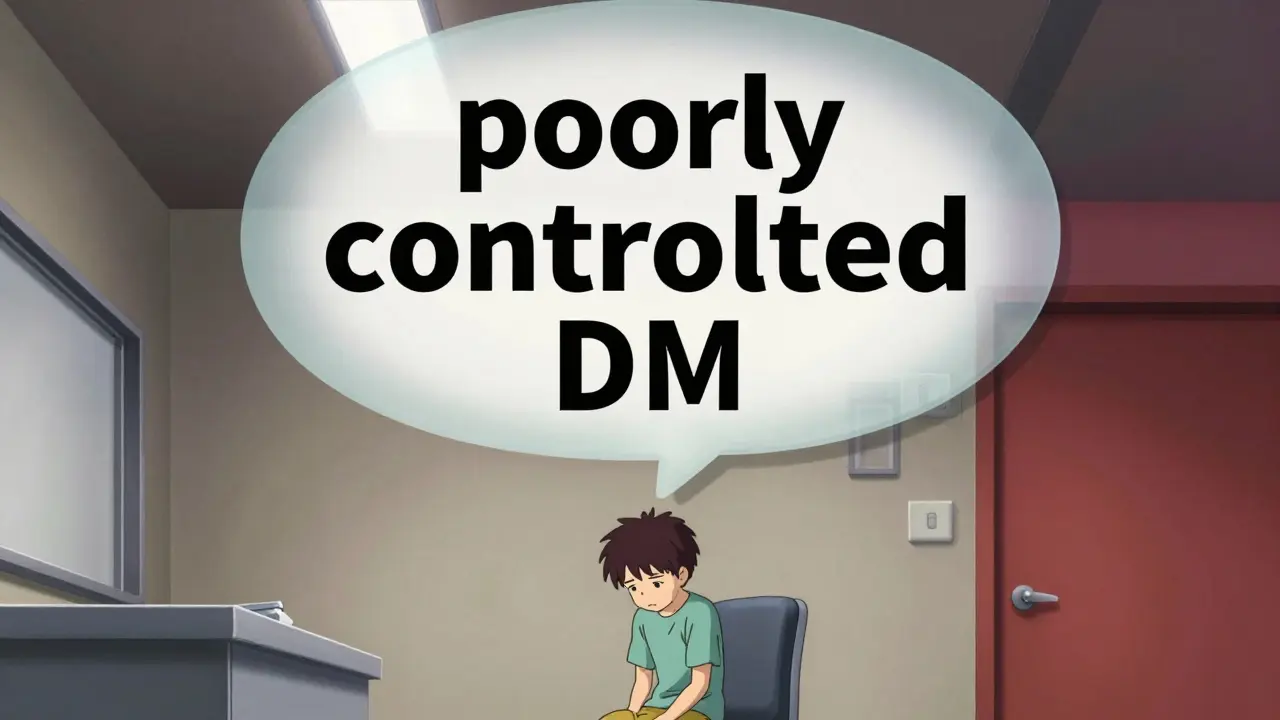
The emotional weight of these labels also differs. Consider the case of a patient who saw "poorly controlled DM" in their records. While the doctor meant the blood sugar levels were high, the patient interpreted it as a moral judgment-that they were a "bad person" for not managing their health well enough. This is where clinical precision clashes with human emotion.
| Feature | Healthcare Provider Labeling | Patient Information Labeling |
|---|---|---|
| Primary Goal | Billing, Research, Clinical Accuracy | Symptom Management, Daily Life |
| Format | Coded, Standardized (ICD-10, CPT) | Narrative, Experiential |
| Example | "Myocardial Infarction" | "Heart Attack" |
| Storage | Electronic Health Records (EHRs) | Personal Memory / Patient Journals |
The Role of Health Information Management (HIM)
Bridging this gap is the primary job of Health Information Management (HIM) the practice of acquiring, analyzing, and protecting digital and traditional medical information on patients professionals. These experts ensure that the data is accurate enough for CMS the Centers for Medicare & Medicaid Services, the federal agency that administers the nation's major healthcare programs reimbursement while still maintaining the integrity of the patient's record. They act as the translators who ensure that a patient's narrative is correctly converted into the codes required by the system.
HIM specialists spend thousands of hours mastering these coding guidelines. They are the ones ensuring that the data entering an Epic a leading electronic health record system used by a significant portion of U.S. hospitals or Cerner system is precise. However, the shift toward patient-centered care is forcing these systems to evolve. We are seeing more "plain language" templates that automatically convert a scary-sounding clinical term into something a regular person can understand.
Laws and Tech Closing the Gap
For a long time, patients were locked out of their own clinical notes. That changed with the 21st Century Cures Act a 2016 U.S. law aimed at accelerating medical product development and improving electronic health record interoperability. This law mandated that providers share clinical notes with patients without blocking the information. Suddenly, millions of people had access to their records via portals like MyChart.
While this provided transparency, it also highlighted the labeling problem. To fight this, the OpenNotes a national movement to give patients access to their clinicians' notes in their health records movement has pushed for clearer communication. Data shows that when patients can actually understand their notes, medication adherence increases by about 19% and confusion about their condition drops significantly.
Looking forward, AI is stepping in. Tools like Google Health's Med-PaLM 2 are attempting to automate the translation of clinical jargon into patient-friendly language. While not yet perfect, the goal is a future where your EHR can toggle between "Clinician View" and "Patient View" with a single click.
How to Bridge the Gap During Your Next Visit
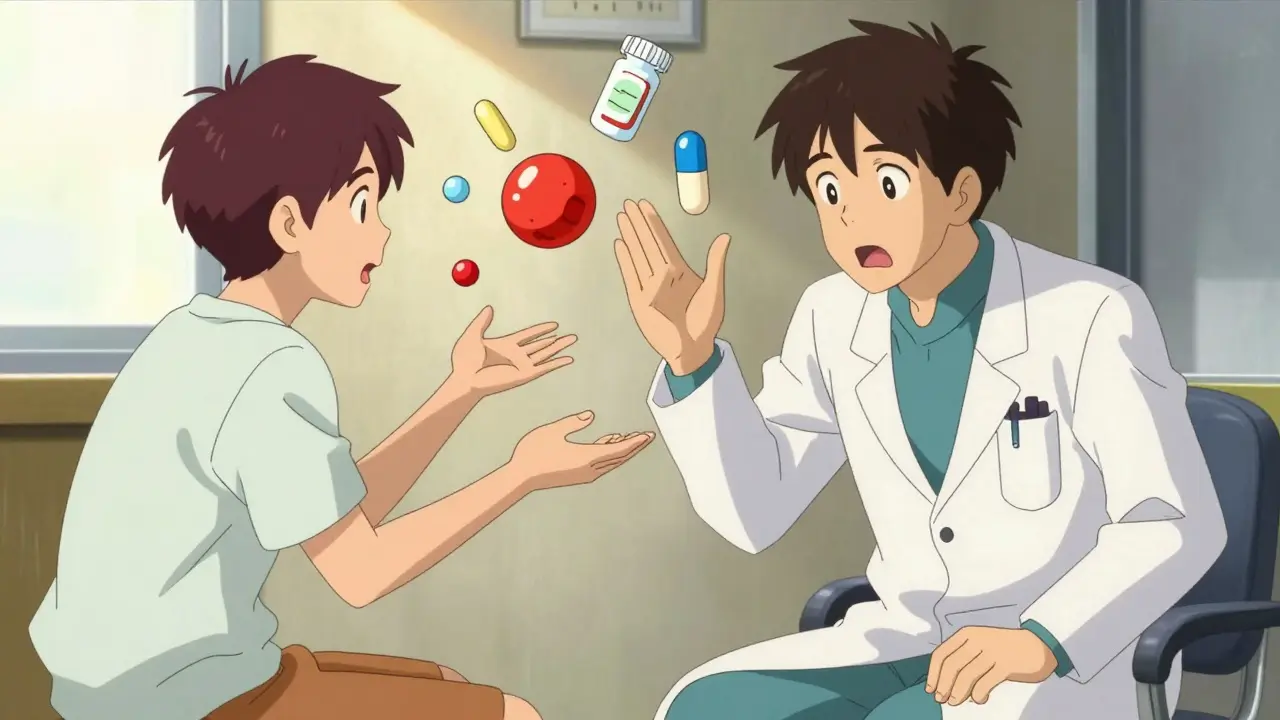
You don't have to wait for an AI to translate your doctor's notes. You can take control of the labeling process yourself during your appointment. One of the most effective tools is the "teach-back" method. When your doctor gives you a diagnosis or instruction, repeat it back to them in your own words. For example: "So, you're saying my blood pressure is high, and I need to take this pill every morning to prevent a stroke?" This forces the provider to realize if their "label" hasn't been translated into a concept you understand.
Also, don't be afraid to ask for the "plain language" version of a term. If you see "edema" in your portal, ask your doctor, "Does this just mean swelling?" Most providers are happy to clarify, though they are often pressed for time-averaging less than 16 minutes per visit. Being direct and specific helps them give you the answer quickly.
What is the difference between a diagnosis code and a patient's description?
A diagnosis code, like those found in ICD-10, is a standardized alphanumeric label used for billing, insurance, and medical research to ensure every doctor in the world means the same thing by a specific disease. A patient's description is a narrative based on symptoms and lived experience (e.g., "I feel dizzy") which provides context that codes often miss.
Why do doctors use such complicated terms instead of plain language?
Standardized medical terminology allows for precise communication between different healthcare providers and is required for legal documentation and insurance reimbursement through CMS. Using "hypertension" instead of "high blood pressure" ensures there is no ambiguity in a clinical setting.
Can I request that my medical notes be written in simpler language?
Yes. While the official record must remain clinical, many organizations now use patient portals that offer simplified summaries. You can ask your provider to explain their notes in plain language during your visit or request a summary that avoids heavy jargon.
What is the 21st Century Cures Act and how does it affect my records?
The 21st Century Cures Act is a law that prohibits "information blocking." It requires healthcare providers to give patients timely access to their electronic health records, including clinical notes, usually through an online portal.
How does the 'teach-back' method help reduce medical errors?
The teach-back method requires the patient to repeat the provider's instructions in their own words. This reveals any misunderstandings in terminology immediately, allowing the provider to correct the information before the patient leaves the office, which can reduce miscommunication by up to 45%.
Next Steps for Patients and Providers
If you are a patient, start by reviewing your patient portal and highlighting any terms you don't recognize. Bring this list to your next appointment. If you are a provider, consider implementing simple changes like the "OpenNotes" approach-writing your notes with the assumption that the patient will read them. This small shift in perspective can turn a confusing medical record into a collaborative tool for healing.