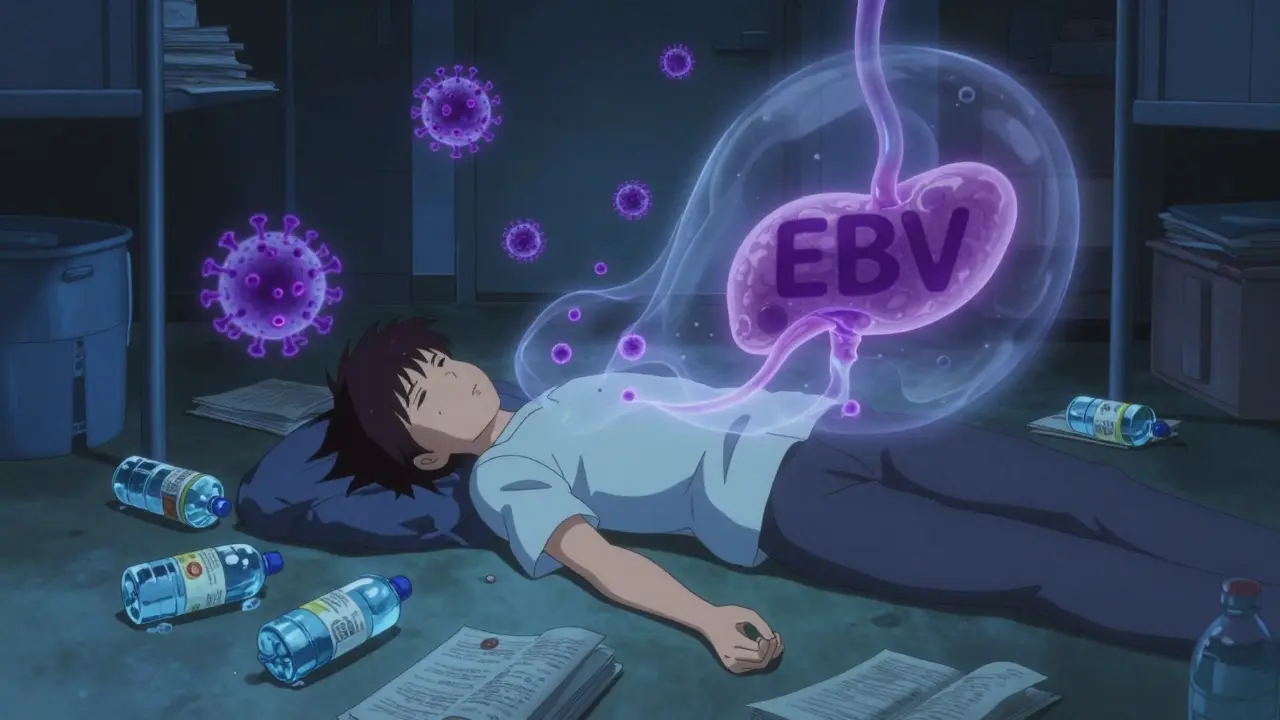
Most people think of mononucleosis as just a bad sore throat that won’t go away. But it’s more than that. It’s a quiet, exhausting virus that sneaks in, takes over your energy, and doesn’t leave quickly. Caused by the Epstein-Barr virus (a type of herpesvirus that infects over 95% of adults by age 35), mononucleosis-often called "mono"-hits hardest in teens and young adults. You might catch it from sharing a drink, kissing someone, or even coughing near them. The virus doesn’t care if you’re healthy, active, or careful. It just waits for the right moment to strike.
What Happens When Epstein-Barr Virus Takes Over
The Epstein-Barr virus (also known as human herpesvirus 4) doesn’t attack your lungs or gut like a cold or flu. It targets your immune system-specifically, your B-cells in the throat. Once inside, it multiplies and spreads through your lymph nodes. That’s why your neck swells, your throat feels like it’s on fire, and you feel like you’ve been hit by a truck.
Symptoms don’t show up right away. It takes 4 to 6 weeks after exposure for fever, extreme fatigue, and swollen glands to appear. By then, you’ve already passed the virus to others. That’s why mono spreads so easily in schools, dorms, and sports teams. You can be contagious for weeks-even before you know you’re sick.
The classic signs are a trio: fever (usually 101-104°F), swollen lymph nodes in the neck, and a sore throat that doesn’t improve with antibiotics. About 90% of people with mono get all three. But the real killer? Fatigue. It’s not just being tired. It’s waking up exhausted, needing a nap after brushing your teeth, and feeling drained after a 10-minute walk. Studies show 98% of patients report this level of exhaustion. It’s not in your head. It’s your body fighting a silent war.
Why Antibiotics Don’t Work-and Why They Can Make Things Worse
Many people go to the doctor thinking they have strep throat. They get a rapid test, and it’s negative. But because the sore throat is so bad, some doctors still prescribe antibiotics like amoxicillin or ampicillin. That’s when things get dangerous.
Up to 90% of people with mono who take those antibiotics develop a red, itchy rash all over their body. It’s not an allergy. It’s a direct reaction between the virus and the drug. And it’s not harmless. It can last for weeks, make you feel worse, and send you back to the clinic confused and frustrated.
Antibiotics don’t kill viruses. They only work on bacteria. Mono is viral. There’s no magic pill to speed it up. The body has to fight it on its own. That’s why rest isn’t optional-it’s the only treatment that matters.
The Hidden Danger: Your Enlarged Spleen
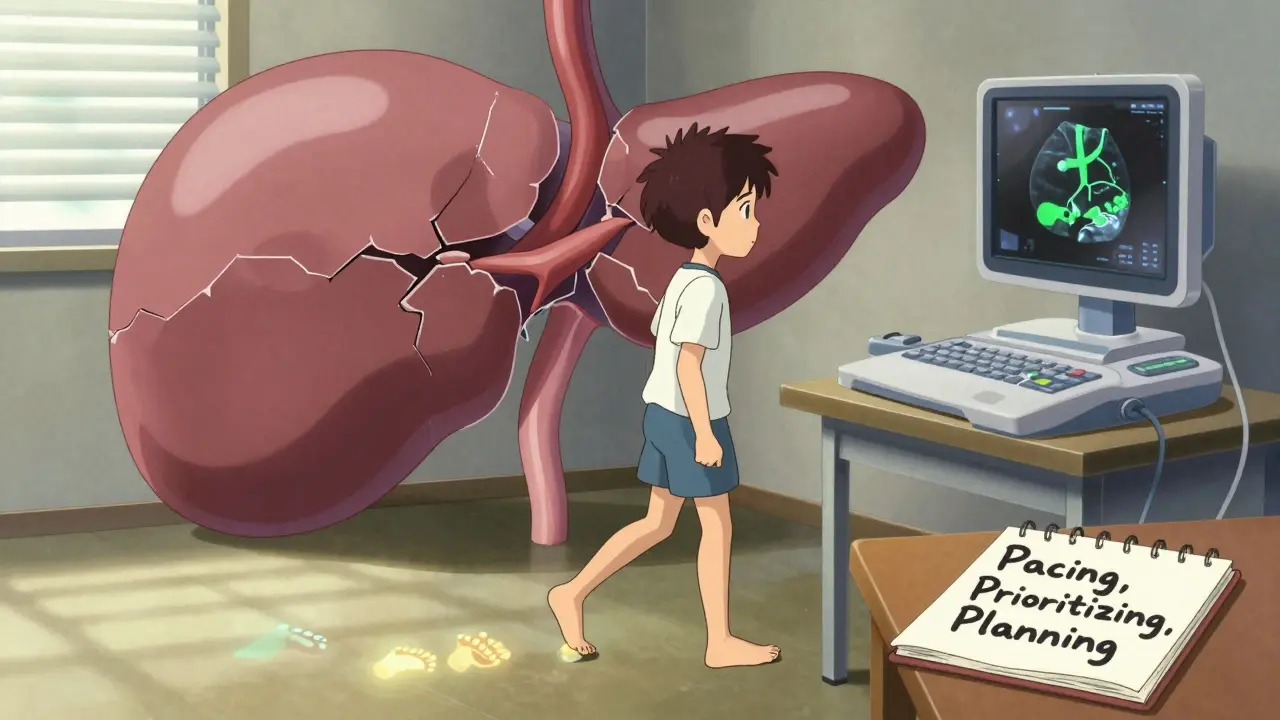
One of the most serious-but often ignored-risks of mono is an enlarged spleen. About half of people with mono develop splenomegaly. It’s not something you can feel. You won’t know it’s happening unless you get an ultrasound.
Here’s why it’s dangerous: a swollen spleen is fragile. A bump, a fall, even a hard cough can cause it to rupture. That’s a medical emergency. Internal bleeding can happen fast. In rare cases, it’s fatal.
Doctors tell you to avoid contact sports for at least four weeks. That means no soccer, basketball, wrestling, or even heavy lifting. But here’s the catch: many people feel better after two weeks and think they’re fine. They’re not. Studies show 90% of spleens return to normal size within 30 days-but 1 in 10 people take up to 12 weeks. That’s why ultrasound clearance before returning to sports isn’t just advice-it’s a safety rule.
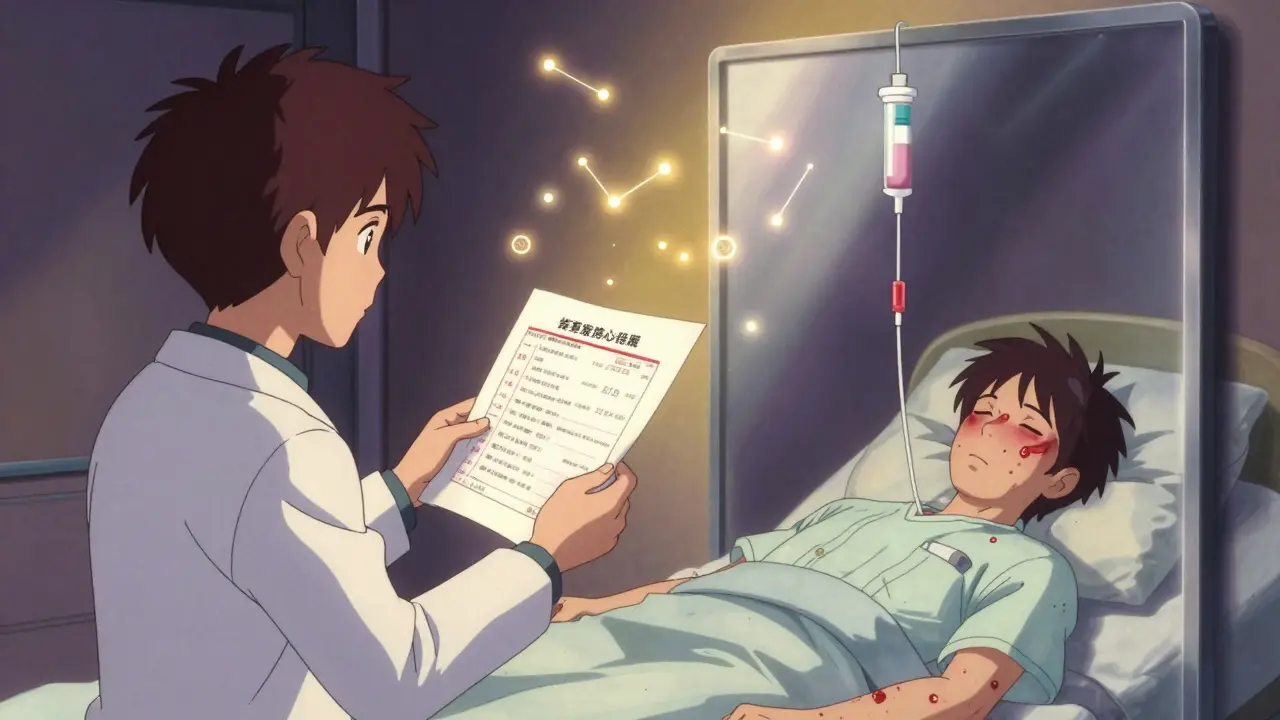
Fatigue That Lasts Months
Most people expect to feel normal after a few weeks. That’s what doctors used to say. But real-world experience tells a different story.
On Reddit’s r/mononucleosis, one user wrote: "I thought I was recovered at week 3. Then, at week 5, just taking a shower left me lying on the bathroom floor for an hour." That’s not rare. In fact, 78% of patients in a 2023 survey said fatigue was worse than the sore throat.
It’s not unusual for energy levels to stay low for 2 to 4 months. Some people can’t return to full-time work or school until 10 or 12 weeks after diagnosis. The fatigue isn’t laziness. It’s your immune system still running on high. Your body hasn’t finished healing.
There’s a strategy that helps: the "Pacing, Prioritizing, Planning" method. Start at 50% of your pre-illness activity level. Do 20 minutes of walking, then rest for 20 minutes. Drink water. Don’t push. If you feel worse the next day, you went too far. Slow, steady wins the race. Stanford’s Fatigue Clinic found this approach improved energy levels in 70% of patients.
When Mono Doesn’t Go Away
Most cases clear up on their own. But for some, the fatigue sticks around. If you’re still exhausted after six months, you’re not alone. Around 1 in 10 people develop long-lasting symptoms.
New research is pointing to inflammation as the culprit. A 2023 study at the University of Toronto found that patients with prolonged fatigue had high levels of a protein called IL-10 in their blood. That’s now being used as a predictor-doctors can test for it and know who’s at risk for long-term fatigue.
One promising treatment is low-dose naltrexone (LDN). In a 2023 trial, patients on LDN had 40% more improvement in fatigue than those on a placebo. It’s not a cure, but it’s helping people reclaim their lives.
The Bigger Picture: Mono and Multiple Sclerosis
There’s a link between mono and multiple sclerosis (MS) that’s only recently been understood. A 2022 Harvard study of 10 million military personnel found that people who had mono were 1.3 times more likely to develop MS later in life.
That sounds scary-but the actual risk is tiny. Only 0.03% of people with mono develop MS. Still, it’s a major clue. Scientists now believe the Epstein-Barr virus plays a key role in triggering MS. In fact, a new drug called atrasentan, which targets EBV-infected B-cells, reduced new MS lesions by 60% in early trials.
This isn’t just about mono anymore. It’s about understanding how a common childhood infection can shape long-term health. And that’s why researchers are racing to develop an EBV vaccine. Moderna’s mRNA-1189 vaccine showed 92% success in early testing. If it works, it could prevent not just mono-but possibly MS too.
How to Know You Have Mono (Not Just a Cold)
There’s no single test that catches mono on day one. The Monospot test looks for antibodies your body makes in response to EBV. But it’s only 85% accurate in the second week. If it’s negative and you still feel awful, your doctor should order EBV-specific blood tests: VCA-IgM (acute infection), VCA-IgG (past infection), and EBNA (long-term immunity).
Other clues? Bloodwork showing high lymphocytes (over 10% of your white blood cells), low platelets, or abnormal liver enzymes. These aren’t normal for a cold or flu. They point to mono.
And if you’re a student-athlete? Many schools now require a spleen ultrasound before you can return to play. It’s not overkill-it’s necessary.
What to Do Right Now
If you think you have mono, here’s what actually works:
- Rest-no pushing through. Your body needs energy to heal.
- Hydrate-water helps your immune system and prevents dizziness from fatigue.
- Take acetaminophen for fever or pain. Avoid ibuprofen or aspirin if your platelets are low.
- Avoid alcohol-it stresses your liver, which is already working hard.
- Don’t share drinks, utensils, or kisses until you’re cleared by a doctor.
- Get an ultrasound if you play contact sports. Don’t guess about your spleen.
- Track your energy. Use a simple log: activity, how you felt before and after, rest time.
And if your doctor tells you to "just get more sleep" and that you’ll be fine in two weeks? They’re not wrong-but they’re not giving you the full picture. Mono recovery isn’t linear. It’s messy. It’s slow. And it’s okay to need more time.
Can you get mono twice?
Once you’ve had mono caused by Epstein-Barr virus, you won’t get symptomatic mono again. The virus stays in your body for life, but your immune system keeps it under control. You might test positive for EBV antibodies forever, but you won’t get the full-blown illness again. Rare reactivations happen in people with weakened immune systems, but they rarely cause mono symptoms.
Is mono contagious after symptoms go away?
Yes. The Epstein-Barr virus stays in your saliva for months-even years-after you feel better. You can still pass it to others, though the risk drops significantly after 3-6 months. That’s why it’s still smart to avoid sharing drinks or kissing for at least 6 months after diagnosis.
Can children get mono?
Yes, but they rarely show classic symptoms. Most kids infected with EBV before age 5 have mild cold-like symptoms or no symptoms at all. That’s why mono is considered a "teen disease"-it’s the older age groups who develop the full, dramatic version. By age 35, nearly everyone has been exposed.
Why does mono make you so tired?
Your immune system goes into overdrive to fight the virus. This creates inflammation and releases chemicals called cytokines that signal your brain to conserve energy. That’s why you feel sleepy, achy, and mentally foggy. It’s not laziness-it’s your body’s way of forcing you to rest so it can heal.
Can you exercise with mono?
Light walking or gentle stretching is fine if you feel up to it. But intense exercise, weightlifting, or contact sports are dangerous. The risk of spleen rupture is highest in weeks 2-4. Wait for a doctor’s clearance and an ultrasound before returning to any strenuous activity. Pushing too soon can lead to serious injury.
Is there a cure for mono?
No cure exists because it’s a viral infection. Your body heals itself over time. Treatment focuses on managing symptoms: rest, hydration, pain relief, and avoiding complications. Antivirals like acyclovir don’t change the outcome for most people. The best "cure" is patience and smart recovery habits.
What Comes Next?
If you’re recovering from mono, give yourself grace. It’s not a race. You’re not behind. Your energy will come back-but on its own schedule. Keep listening to your body. Track your progress. And if you’re still struggling after six months, ask your doctor about testing for persistent inflammation or trying low-dose naltrexone.
And if you’re a parent, coach, or teacher-know this: fatigue after mono isn’t laziness. It’s biology. The next time someone says, "I’m just tired," don’t assume they’re being dramatic. They might be fighting a virus that’s still working inside them.
Sidhanth SY
January 31, 2026 AT 21:54Man, I got mono in college and thought I was fine after two weeks. Went back to playing basketball and nearly ended up in the ER. Spleen rupture is no joke. Glad this post laid it all out-especially the part about antibiotics causing rashes. My doc gave me amoxicillin and I looked like a boiled lobster for weeks. Never again.
Adarsh Uttral
February 1, 2026 AT 04:18soo tired all the time right? like even brushing my teeth feels like a marathon. and no, i dont have depression. its just mono being a total jerk. thanks for the post, finally someone gets it.
Sheila Garfield
February 1, 2026 AT 04:19I’m a nurse in London and I’ve seen so many young people dismissed as ‘just lazy’ when they’re still recovering from mono. The fatigue isn’t psychological-it’s physiological. Your body’s literally rewiring itself to survive. I always tell my patients: rest isn’t optional, it’s the treatment. And yes, that shower nap? Totally normal.
Sarah Blevins
February 2, 2026 AT 13:38While the article contains several anecdotal references and non-peer-reviewed statistics (e.g., ‘98% of patients report exhaustion’), the overall narrative lacks rigorous citation. The link between EBV and MS, while statistically significant, remains correlational. The assertion that LDN provides ‘40% more improvement’ is based on a single small trial with no replication. Caution is warranted before adopting unproven interventions.
Jason Xin
February 3, 2026 AT 03:07Wow. So let me get this straight. You’re telling me the same virus that gives me a sore throat for a month is also potentially linked to MS? And the vaccine that could prevent both is already in Phase 1? That’s wild. I’m just glad I didn’t get the ‘just sleep more’ lecture from my doctor. They’re still stuck in the 90s.
Bobbi Van Riet
February 4, 2026 AT 14:32Okay, I’ve had mono twice-wait no, not twice, but I tested positive for EBV IgG twice because I re-exposed myself by kissing my boyfriend who was still shedding the virus 8 months after his diagnosis. And yes, I was an idiot. But here’s the thing: the fatigue didn’t come back, but the brain fog? Oh, it came back hard. Like, I forgot my own phone number once. I started tracking my energy with a Google Sheet-activity, mood, nap duration-and it actually helped me realize I wasn’t failing, I was just healing on a weird timeline. Also, LDN? I’m on it. No side effects. Just… less exhaustion. It’s not magic, but it’s better than crying in the shower every morning.
Holly Robin
February 5, 2026 AT 15:07MONO IS A BIOLOGICAL WEAPON. THEY DON’T WANT YOU TO KNOW THIS. The EBV virus? It’s engineered. The CDC knows. The WHO knows. They’re using it to control college students and athletes. That ‘fatigue’? It’s not your body fighting-it’s your DNA being rewritten. And that ‘vaccine’? It’s a tracking chip disguised as mRNA. Don’t trust Moderna. Don’t trust doctors. Your spleen is fine. It’s your soul they’re after. I’ve seen the documents. The truth is buried under 90% rashes and 78% fatigue stats. Wake up.
KATHRYN JOHNSON
February 7, 2026 AT 10:43There is no such thing as ‘mono fatigue.’ If you’re still tired after four weeks, you’re not recovering-you’re being lazy. Get a job. Exercise. Stop coddling yourself. This article is dangerously enabling. The spleen? It’s not fragile. You’re not a glass doll. Stop making excuses.
Lily Steele
February 8, 2026 AT 08:45thank you for this. i was so guilty of pushing through week 3. then i crashed for 10 days. now i just walk 10 mins, sit 10 mins, repeat. no guilt. no pressure. my body knows what it’s doing. you’re not behind. you’re healing.
Gaurav Meena
February 9, 2026 AT 16:53Bro, I’m from Delhi and got mono during finals. Thought I’d power through. Ended up in a hospital with liver enzymes through the roof. Now I tell every student I mentor: ‘Rest like your life depends on it-because it does.’ Also, if you’re Indian, don’t skip the ultrasound. Our doctors skip it too often. Don’t be that guy. 😊
Amy Insalaco
February 11, 2026 AT 02:44While the piece is rich in anecdotal data, it fundamentally misunderstands the pathophysiology of post-viral fatigue. The IL-10 hypothesis is not a validated biomarker-it’s a correlative signal in a single cohort study with no longitudinal validation. The use of low-dose naltrexone, while intriguing in autoimmune contexts, lacks phase III evidence for post-mono fatigue. Furthermore, the conflation of EBV seropositivity with MS causation ignores the confounding role of vitamin D deficiency, Epstein-Barr viral load kinetics, and HLA-DRB1*15:01 allelic expression. This is science journalism masquerading as clinical guidance.
Marc Bains
February 12, 2026 AT 01:38I’m a coach in Texas and I used to make my players push through fatigue. After seeing two kids get spleen ruptures, I changed everything. Now we require a doctor’s note AND an ultrasound before they touch a ball. I don’t care if they’re ‘ready.’ I care if their spleen is the size of a grapefruit. This post? It’s the one I print and hand out to every parent and athlete. Thank you.
Kelly Weinhold
February 13, 2026 AT 03:03Healing from mono feels like climbing a mountain in slow motion. Some days you take three steps. Other days you slide back ten. But you’re still moving. And that’s enough. I started journaling one thing I did each day-even if it was just drinking water. And guess what? After 14 weeks, I walked to the mailbox without needing a nap. It’s not linear. But it’s possible. You’re not broken. You’re becoming.
Eliana Botelho
February 13, 2026 AT 11:57Okay but why is no one talking about how the Epstein-Barr virus is secretly controlled by Big Pharma? They want you to think it’s just ‘fatigue’ so you keep buying painkillers and not asking why there’s no cure. And the vaccine? It’s just a way to implant microchips under the guise of ‘immunity.’ I’ve read the patents. They’re using the same tech as the COVID shots. They’re testing it on teens first because they’re ‘gullible.’ Wake up. This isn’t medicine-it’s control.