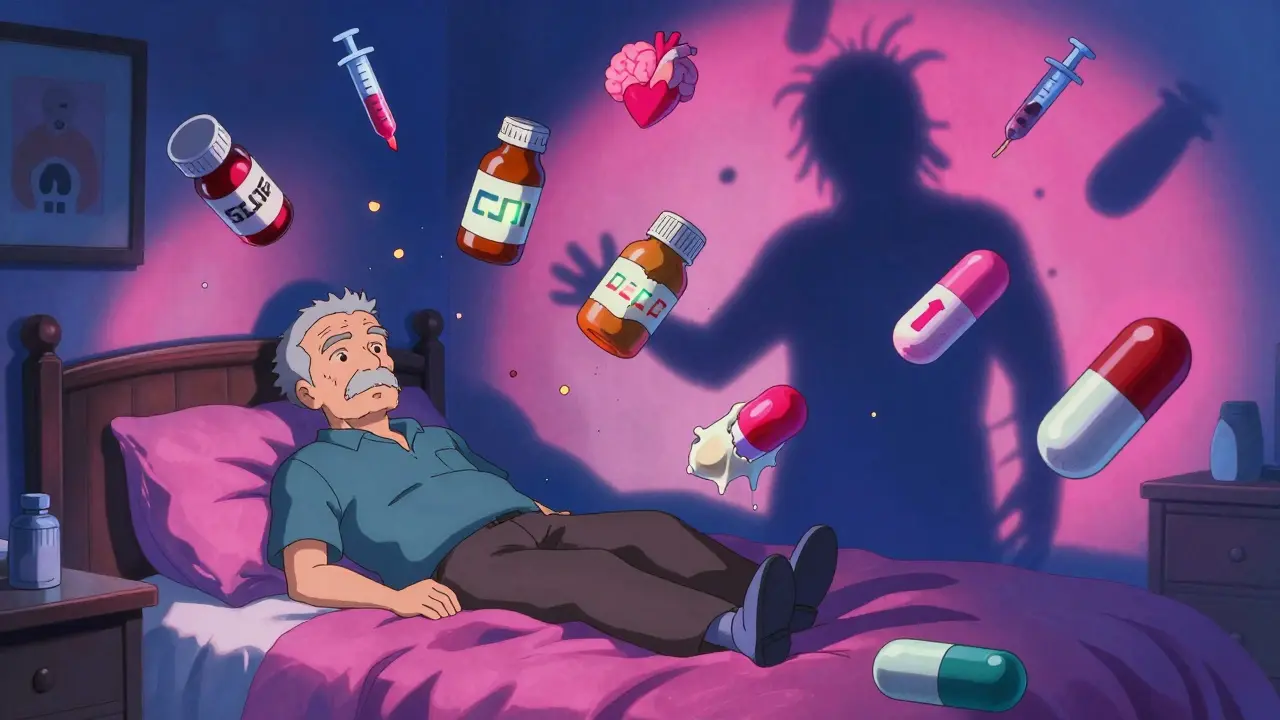
Every year, more than 1.5 million people in the U.S. are harmed by medications-not because they’re sick, but because something went wrong with their treatment. That’s not a rare mistake. It’s happening to someone you know. A neighbor. A parent. A friend. And most of these errors are completely preventable.
How Common Are Medication Errors?
One in every 20 patients worldwide experiences harm from a medication error. That’s 5%. In the U.S., that translates to over 1.3 million people each year. These aren’t just minor side effects. These are hospitalizations, emergency room visits, permanent injuries, and deaths. At least 7,000 people die in U.S. hospitals every year because of medication mistakes. That’s more than car accidents or breast cancer deaths annually.
It’s not just hospitals. Mistakes happen everywhere: at pharmacies, in nursing homes, and most dangerously-right in your own home. Studies show that between 2% and 33% of patients make errors taking their meds at home. Some forget doses. Others double up because they’re confused. Some take the wrong pill because the bottle looks different this time. And too often, no one asks them why.
Which Drugs Are Most Dangerous?
Not all medications carry the same risk. Some are far more likely to cause harm if used incorrectly.
- Antibiotics are involved in about 20% of all medication-related harm events. Overuse, wrong dosing, or skipping doses can lead to resistant infections or severe allergic reactions.
- Antipsychotics are next, at 19%. These drugs are often prescribed to elderly patients with dementia-even though they increase the risk of stroke and death in this group.
- Cardiovascular drugs like blood thinners and high blood pressure meds cause 15% of harm. A tiny mistake in dosage can cause internal bleeding or a stroke.
- IV medications are the most error-prone in hospitals. Nearly half of all medication errors happen with drugs given through an IV line.
And then there’s the growing crisis of counterfeit drugs. In North America, one in three fake pills seized by authorities contain fentanyl-often at lethal doses. Between 2019 and 2021, over 55% of overdose deaths involving oxycodone were from fake pills sold as the real thing. You can’t tell the difference by looking. One pill can kill.
Who’s Most at Risk?
Older adults are the most vulnerable. People over 65 take an average of four to five prescription drugs daily. The more meds you take, the higher your chance of a dangerous interaction. In Australia, efforts to reduce antipsychotic use in seniors cut inappropriate prescriptions by 11% between 2016 and 2021-and saved lives.
But it’s not just age. People with mental health conditions, chronic illnesses, or limited health literacy are also at high risk. A Reddit analysis of over 1,200 medication-related posts found that 68% of users were confused about their dosage instructions. Another 22% said their doctor never explained possible side effects. If you don’t understand what you’re taking, you’re already in danger.

Why Do These Errors Keep Happening?
It’s not because doctors or nurses are careless. Most errors come from broken systems-not bad people.
Doctors write prescriptions that are hard to read. Pharmacies are understaffed and overwhelmed. Patients get multiple prescriptions from different providers and don’t tell anyone about the over-the-counter pills or supplements they’re taking. Hospitals use outdated electronic systems that don’t talk to each other. And too many patients are too afraid to ask questions.
As Dr. Donald Berwick, former head of Medicare, said: “Most medication errors are system failures, not individual failures.” That means fixing this isn’t about blaming staff. It’s about redesigning how care is delivered.
What’s Being Done to Fix It?
Some places are making real progress.
Australia launched a national plan with 16 specific actions to cut medication harm by half by 2025. So far, they’ve seen:
- A 37% drop in opioid-related deaths since 2018 thanks to real-time prescription monitoring.
- A 10% reduction in hospitalizations from insulin errors.
- A 11% drop in antipsychotic prescriptions for seniors.
In the U.S., Medicare is rolling out 16 new safety measures for 2025. They’ll track how well patients are taking their cholesterol, blood pressure, and diabetes meds-and whether high-risk drugs like opioids and antipsychotics are being used properly.
The FDA now requires safety features on prescription packaging in the EU. In the U.S., the Risk Evaluation and Mitigation Strategies (REMS) program forces manufacturers to add extra warnings and training for dangerous drugs.
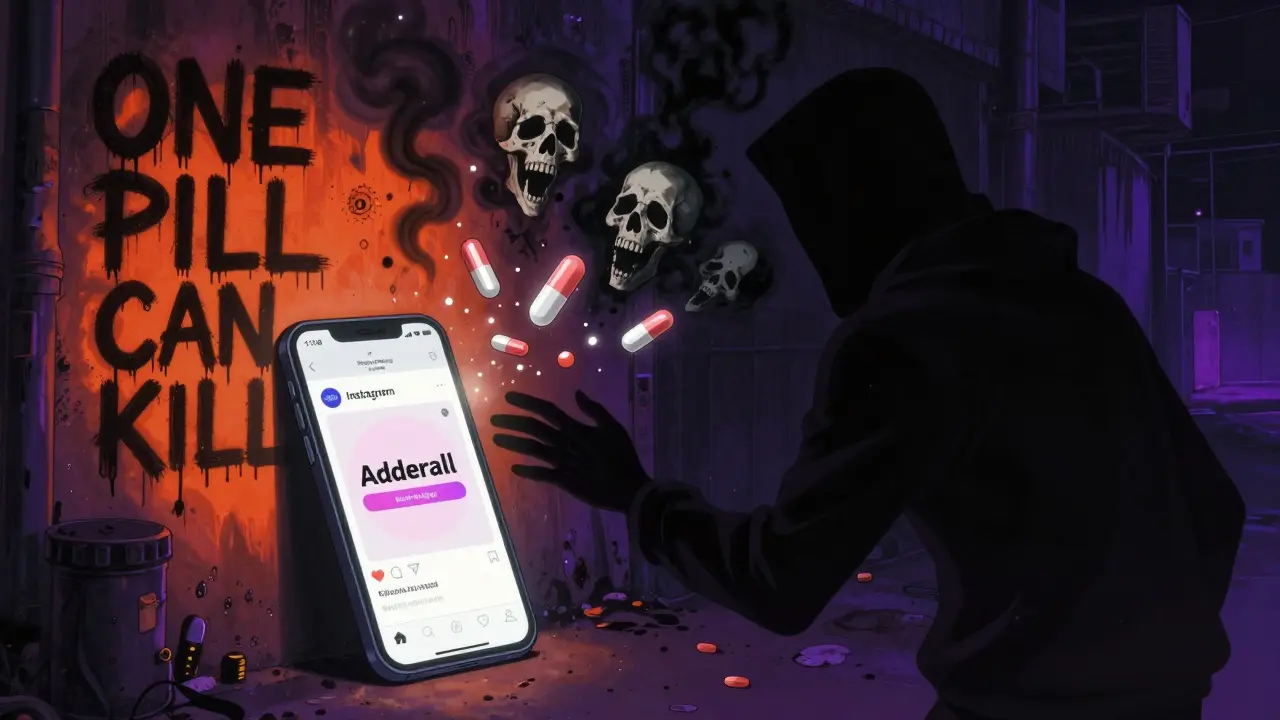
But the biggest threat isn’t outdated systems-it’s fake drugs sold online. The DEA seized over 80 million fentanyl-laced counterfeit pills in 2023 alone. Many are sold through Instagram, Facebook, or text messages. People think they’re buying Adderall or Xanax. They’re getting a lethal dose of fentanyl instead.
What You Can Do to Protect Yourself
You can’t control the hospital system. But you can control what happens in your hands.
Here’s what works:
- Keep a complete, up-to-date list of every medication you take-including vitamins, supplements, and over-the-counter drugs. Update it every time your doctor changes something.
- Use one pharmacy for all your prescriptions. That way, they can check for dangerous interactions across all your meds.
- Ask these three questions every time you get a new prescription: What is this for? How do I take it? What are the side effects? If the answer is vague, ask again.
- Check the pills. If your new prescription looks different from last time, don’t assume it’s the same. Call the pharmacy. Ask if it’s a generic or if the formula changed.
- Don’t skip doses-and don’t double up. If you forget a pill, call your pharmacist. Don’t guess.
- Watch for red flags. If a drug is being sold online for way less than normal, it’s probably fake. If it comes in a plain envelope with no label, don’t take it.
The World Health Organization calls this the “5 Moments for Medication Safety”: when you start a new drug, when you add one, when you move between care settings (like from hospital to home), when you’re on high-risk meds, and when you review everything every few months.
The Bottom Line
Medication safety isn’t just a hospital problem. It’s a personal one. Every pill you take carries risk-but most of those risks are avoidable. You don’t need to be a doctor to protect yourself. You just need to be informed, curious, and willing to ask questions.
The system isn’t perfect. But you’re not powerless. The same statistics that show how dangerous medications can be also show how much can be fixed-with simple actions, clear communication, and a little persistence.
Next time you pick up a prescription, don’t just walk away. Ask. Check. Confirm. Your life might depend on it.
Pawan Chaudhary
December 17, 2025 AT 22:15Really glad someone put this out there. I’ve seen my dad nearly die from a mix-up with his blood thinner, and it broke my heart. But after we started using one pharmacy and writing everything down? Zero issues since. Small steps save lives.
Jonathan Morris
December 18, 2025 AT 16:21Let’s be real: the FDA and CDC are complicit in this crisis. They’ve known about the fentanyl-laced counterfeit pill epidemic since 2016 but refused to mandate blockchain-tracked pharmaceutical supply chains. Meanwhile, they push telehealth apps that can’t even verify pill color. This isn’t negligence-it’s systemic abandonment masked as ‘innovation.’
Linda Caldwell
December 19, 2025 AT 02:58You’re not powerless. Seriously. Just ask. Write it down. Call the pharmacy. One question could be the difference between walking out of the hospital or not. You got this.
Anna Giakoumakatou
December 19, 2025 AT 09:35How quaint. We’ve reduced medication errors by ‘11%’-as if that’s a victory when the baseline was a humanitarian catastrophe. The real tragedy isn’t the pills-it’s the collective delusion that bureaucracy, not capital, is the root of this rot. We treat pharmaceuticals like groceries while the system collapses under its own weight. How poetic.
BETH VON KAUFFMANN
December 19, 2025 AT 18:43Per the CDC’s 2022 National Medication Error Surveillance Report, the most common root cause remains polypharmacy without clinical pharmacist intervention. The 2%–33% home error rate correlates strongly with low health literacy scores, per WHO’s 2021 Health Literacy Index. The ‘three questions’ framework is evidence-based but underutilized due to structural time constraints in primary care. Also, IV errors are disproportionately linked to nurse-to-patient ratios below 1:4. Fix the staffing, not the signage.
Raven C
December 21, 2025 AT 01:32Oh, how delightful. Another feel-good guide for the masses. Let’s all ‘ask questions’-as if the overworked, underpaid nurse who’s been on her feet for 14 hours has the emotional bandwidth to explain the pharmacokinetics of warfarin to a man who thinks ‘generic’ means ‘fake.’ This isn’t empowerment-it’s victim-blaming dressed in neon positivity.
Donna Packard
December 21, 2025 AT 03:12I used to be scared to ask anything. Then my mom had a reaction to a new statin. We called the pharmacy, found out it was a different brand. Simple. I’m so glad I spoke up. You can too.
Patrick A. Ck. Trip
December 22, 2025 AT 11:39I think this is very important. I’ve seen too many people get hurt. Maybe we need more pharmacists in every clinic. And maybe doctors should slow down a bit. I’m not perfect-I misspell sometimes-but I try. Asking questions is brave. And we all need to be braver.
Chris Van Horn
December 23, 2025 AT 17:34THIS IS A MASSIVE COVER-UP. The pharmaceutical industry is deliberately allowing fake pills to flood the market because they profit from the resulting ER visits and long-term care. The DEA seized 80 million pills? That’s just the tip. The real number is 500 million. And they’re all made in China-by companies with ties to the CCP. Wake up, sheeple.
amanda s
December 24, 2025 AT 22:29So what? You want me to write down my meds? I have six kids, two jobs, and a husband who forgets his own birthday. You think I have time to play nurse? This isn’t about ‘personal responsibility’-it’s about a broken system that expects single moms to fix corporate greed with sticky notes.
Peter Ronai
December 26, 2025 AT 22:19Everyone’s talking about ‘asking questions’ like it’s magic. But you know what? The real problem is that doctors don’t listen. I had a cardiologist prescribe me a beta-blocker while I was on a blood thinner-ignored my 12-page med list. Then he blamed me for ‘non-compliance.’ If you’re not a medical student with a PhD in pharmacology, you’re just a liability to the system.
Steven Lavoie
December 27, 2025 AT 13:29As someone who grew up in rural India and now works in a U.S. ER, I’ve seen both sides. In my village, people shared pills from neighbors. Here, people overdose on pills they bought off Instagram. The fear is universal. But the solution? It’s not about tech or policy. It’s about trust. Someone needs to sit with you. Not a chart. Not a robot. A human. Just one. That’s all it takes.