Medication Guide Checker
Check Your Medication
When you pick up a prescription, you might get a small paper booklet tucked into the bag. It’s not a receipt. It’s not a coupon. It’s a Medication Guide-and it could save your life.
What Exactly Is a Medication Guide?
A Medication Guide is a printed handout the FDA requires for certain prescription drugs that carry serious risks. It’s not the same as the tiny label on your pill bottle. That just tells you how many to take and when. The Medication Guide goes deeper. It explains why the drug is dangerous, what could go wrong, and what you need to watch for. These guides are written by drug manufacturers but reviewed and approved by the U.S. Food and Drug Administration. They’re not optional. If your medication needs one, the pharmacist must give it to you every time you fill the prescription-even for refills. As of 2023, about 150 prescription drugs in the U.S. require a Medication Guide. These are mostly high-risk medications like opioids for pain, biologics for autoimmune diseases, certain antidepressants, and drugs used in cancer treatment. The FDA picks these drugs because the risks are real, common, and often preventable-if you know what to look for.Why the FDA Made Them Mandatory
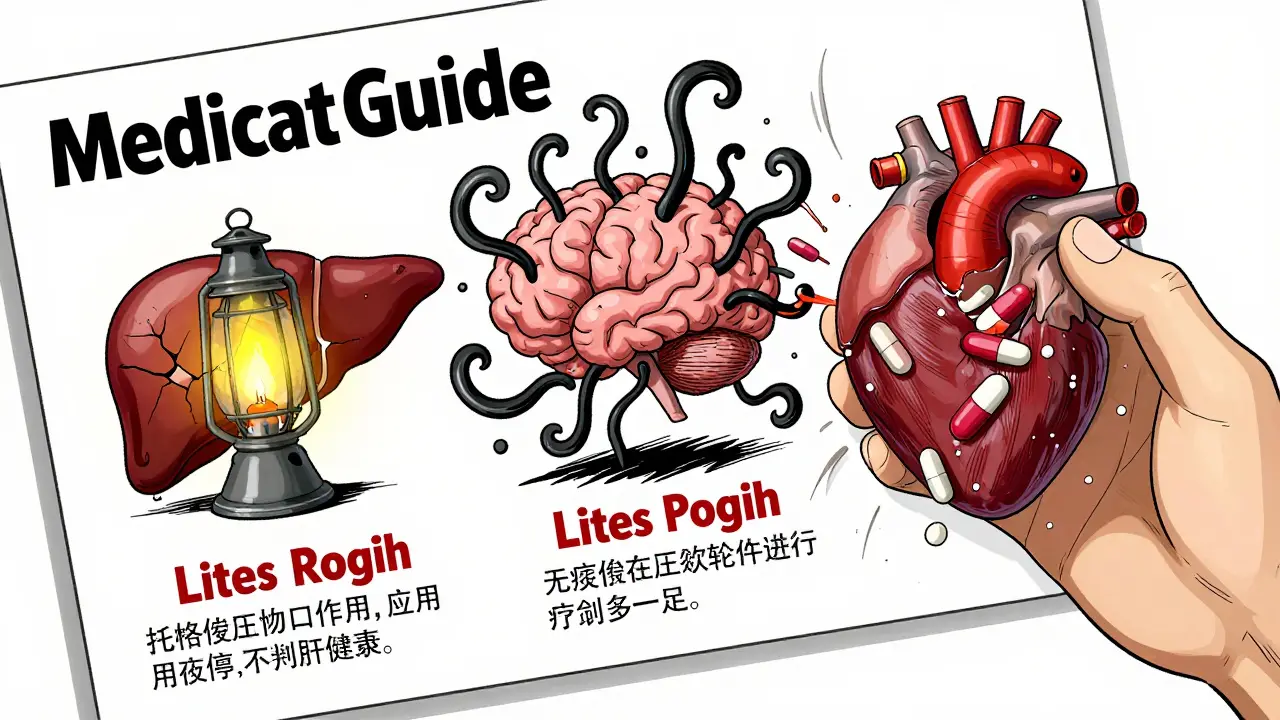
Before Medication Guides became required, too many people ended up in the hospital-or worse-because they didn’t understand the dangers of their meds. A drug might cause liver failure, brain infections, or severe allergic reactions. But the technical details were buried in doctor-focused documents nobody read. The FDA stepped in because patients were dying from things they could’ve avoided. Take Tysabri, a drug for multiple sclerosis. One rare but deadly side effect is a brain infection called PML. A patient on Reddit shared how reading the Medication Guide helped her spot early symptoms-fatigue, vision changes, weakness-and get tested before it was too late. She credits that guide with saving her from permanent disability. The FDA’s goal is simple: give you the facts in plain language so you can make smarter choices. That’s why these guides are written at a sixth-grade reading level. No jargon. No Latin terms. Just clear warnings: “This drug can cause serious liver damage. Stop taking it and call your doctor if you feel unusually tired, your skin turns yellow, or your urine looks dark.”What’s Inside a Medication Guide
Every guide follows the same basic structure. Here’s what you’ll find:- Brand and generic name of the drug
- Why it’s prescribed-what condition it treats
- Serious risks-the side effects that could kill you or land you in the ER
- What to avoid-other drugs, foods, or activities that make it dangerous
- How to store it-some meds need refrigeration; others can’t get wet
- How to dispose of it safely-never flush pills down the toilet
How Medication Guides Are Different From Other Patient Info
You might get other papers from the pharmacy. Maybe a one-page sheet with dosage info. Or a leaflet from the drug company. But here’s the difference:- Package inserts are for doctors. They’re long, technical, full of stats and clinical trial data. You’re not meant to read them.
- Pharmacy counseling sheets vary by store. One pharmacy might give you a detailed breakdown. Another might hand you a printed checklist. No standard. No FDA review.
- Medication Guides are the only patient info that’s federally required, reviewed by the FDA, and consistent across all pharmacies.
But Do People Actually Read Them?
Here’s the hard truth: most people don’t. A 2023 survey of pharmacists found that 63% say patients toss the guide without opening it. Why? Some say, “I already talked to the pharmacist.” Others say, “It’s too long.” Or, “I didn’t think it mattered.” But here’s what’s scary: 78% of people who’ve had a bad reaction to a drug said they’d have acted differently if they’d understood the risks better. And 65% said they’d have read the guide if it had been shorter and easier to understand. The problem isn’t just that people ignore them. It’s that they’re often handed over like a receipt-with no explanation. Pharmacists are rushed. The average time spent explaining a Medication Guide? Just 47 seconds.How to Actually Use Your Medication Guide
Don’t just take it home and forget about it. Here’s how to make it work for you:- Read it before you take your first dose. Don’t wait until you feel weird. Know what’s normal and what’s not.
- Highlight the three biggest risks. Circle them. Write them on a sticky note. Put it on your mirror.
- Ask your pharmacist: “What’s the one thing I should watch out for?” Then ask, “What should I do if I see it?”
- Keep it with your meds. Don’t throw it out. You’ll need it when you refill, or if you go to the ER.
- Bring it to doctor visits. If you’re on multiple drugs, your doctor needs to see what risks you’re already aware of.
What’s Changing With Medication Guides
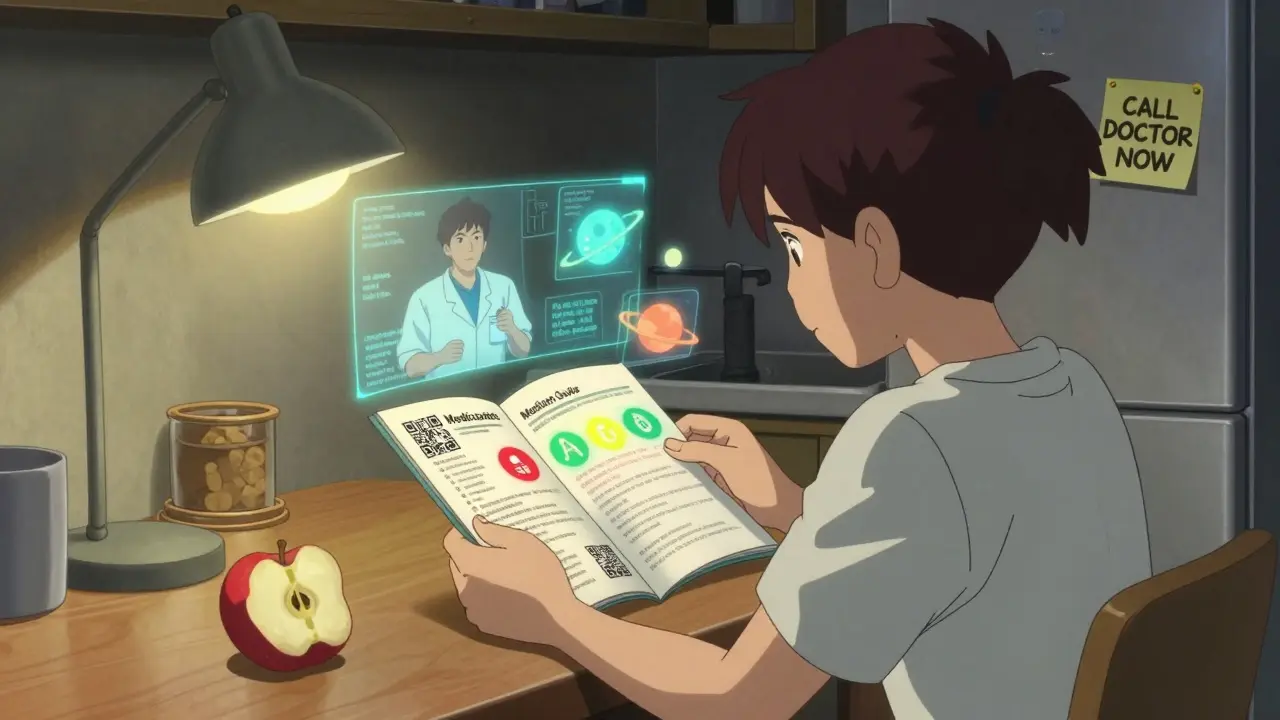
The FDA knows these guides aren’t perfect. So they’re updating them. Starting in 2024, new guides must prove they actually change patient behavior-not just exist on paper. That means clearer language, better visuals, and more focus on what matters most. New features coming soon:- Color-coded risk icons-red for “stop immediately,” yellow for “call your doctor,” green for “normal”
- QR codes that link to short videos explaining risks in plain language
- Digital versions you can download on your phone if you ask for them
- Multilingual options for 25 of the most common languages spoken in the U.S.
Edith Brederode
January 18, 2026 AT 14:30Just read my new antidepressant guide last week and honestly? I cried. Not because I was scared, but because it finally said what my doctor never had time to explain. The part about serotonin syndrome? I didn’t even know that was a thing. Now I keep it taped to my medicine cabinet. 🙏❤️
Arlene Mathison
January 18, 2026 AT 18:11YES. I used to throw these away like junk mail until my mom had a near-fatal reaction to a pain med. She didn’t know it could interact with her wine. Now I make my whole family read them. Even my 70-year-old dad. He says it’s the only thing that’s kept him alive since his bypass. 🚨💊
Carolyn Rose Meszaros
January 19, 2026 AT 14:20My pharmacist handed me my guide like it was a receipt and said 'read this later.' I didn’t. Three days later I had a rash that looked like a spider bite. Turned out it was a rare reaction listed on page 2. I’m never ignoring these again. 😅
Greg Robertson
January 20, 2026 AT 03:08Good post. I’ve worked in pharmacy for 18 years and I can tell you-most patients don’t read them because they’re handed out in a rush. But when we slow down and say, 'This one’s important, let me walk you through it,' people listen. It’s not the guide’s fault. It’s the system.
Art Gar
January 21, 2026 AT 01:52While the intention behind Medication Guides is commendable, one must question the efficacy of mandating such documents without ensuring patient literacy. The FDA’s assumption that a sixth-grade reading level guarantees comprehension ignores socioeconomic disparities in health education. This is performative regulation disguised as patient advocacy.
Crystal August
January 22, 2026 AT 16:10Ugh. More government paperwork. I got a guide for my blood thinner and it was 12 pages long. Who has time for this? I trust my doctor. Why should I read some pamphlet written by a drug company? It’s just fear-mongering to sell more tests and visits.
Nadia Watson
January 23, 2026 AT 09:48as someone who immigrated here from india, i can say these guides are a lifeline. i couldnt read the english ones at first, but when they gave me the spanish version, i used google translate. now i ask for the hindi one too. its not perfect, but its better than nothing. please make more languages available. 🙏
Courtney Carra
January 23, 2026 AT 11:42It’s ironic, isn’t it? We live in an age of hyper-information, yet the most vital information-the one that could keep us alive-is treated like a disposable receipt. The Medication Guide is a silent scream in a world that’s forgotten how to listen. We digitize everything… but still hand out paper like it’s 1998. The QR codes? A start. But true change? That requires culture. And culture? That takes time.
thomas wall
January 23, 2026 AT 21:37As a British citizen who has witnessed the NHS’s patient information protocols, I must say: the American system’s reliance on printed guides is archaic. In the UK, we utilize structured digital portals with voice-over explanations and interactive risk assessments. To depend on paper is to institutionalize ignorance. This is not healthcare-it is bureaucratic theater.
Manoj Kumar Billigunta
January 24, 2026 AT 11:06My cousin in India takes medicine for diabetes. He gets no guide. Just a small slip with the name. He asked me to translate the US guide for him. I did. He said, 'Now I know why I feel weak sometimes.' This is not just American problem. This is human problem. Everyone needs to know.
sagar sanadi
January 26, 2026 AT 03:29Oh sure, the FDA says these guides save lives. But who wrote them? Big Pharma. They’re the ones who made the drug in the first place. The guide says 'warning: may cause liver damage'-but they still sell it. It’s like giving you a manual for how to survive a car crash… while selling you the broken car. 🤡
Emily Leigh
January 27, 2026 AT 12:29Okay but… why are these only for prescription meds? What about OTC stuff? I took 10 Advil one night because I had a migraine… woke up with stomach bleeding. No guide. No warning. Just a pretty bottle. The system is BROKEN. 🤯🤯🤯
Shane McGriff
January 28, 2026 AT 17:26I’ve been a nurse for 15 years. I’ve seen patients ignore these guides… then come back in ICU because they didn’t know to stop the drug when their skin turned yellow. I hand them the guide. I read it with them. I make them tell me back what the red flags are. It takes 10 minutes. And it saves lives. Don’t underestimate the power of simple, clear info.
Jacob Cathro
January 28, 2026 AT 19:58So let me get this straight. The FDA forces pharma to write these guides… but the same pharma that makes the drug also writes the warnings? That’s like letting the fox write the chicken coop’s safety manual. And now they’re adding QR codes? Lol. The next thing you know, they’ll be embedding TikTok dances into the side effects section. 🤦♂️
Paul Barnes
January 29, 2026 AT 22:43There is a fundamental flaw in the current implementation of Medication Guides: they are not standardized in font size, spacing, or layout across manufacturers, which impairs accessibility for visually impaired individuals. Furthermore, the absence of mandatory braille or audio versions constitutes a violation of the Americans with Disabilities Act. This is not merely negligence-it is systemic exclusion.