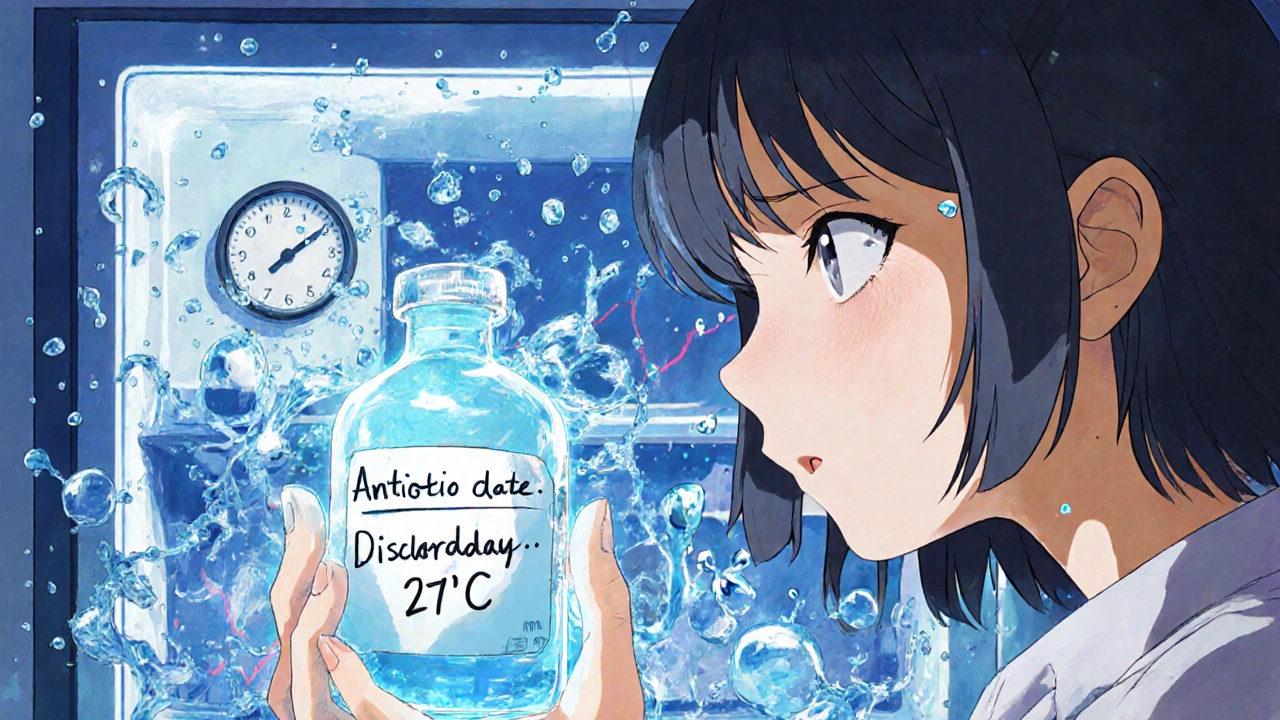
When your child gets an ear infection, the pharmacist hands you a small bottle of liquid antibiotic. It looks harmless. Maybe even sweet. But that bottle has a hidden deadline - one that can make the medicine useless, or worse, dangerous. Most liquid antibiotics don’t last more than two weeks after you mix them with water. And if you leave them on the counter? They might be bad in just five days.
Why Do Liquid Antibiotics Go Bad So Fast?
Antibiotics like amoxicillin and ampicillin are made from beta-lactam compounds. These chemicals are strong enough to kill bacteria - but only when they’re stable. Once you add water to the powder, the chemical structure starts breaking down. It’s not mold. It’s not dirt. It’s chemistry. Water causes the beta-lactam ring to open, and once that happens, the drug loses its power.
This isn’t guesswork. Studies show that reconstituted amoxicillin keeps at least 90% of its strength for up to 14 days if kept cold. But amoxicillin with clavulanate - a common combo for tougher infections - drops below that mark after just 10 days. Why? Clavulanate, the helper drug that blocks bacterial resistance, is even more fragile. It degrades faster than amoxicillin alone. That’s why doctors and pharmacists treat these two differently.
Temperature is the biggest enemy. Every 10°C rise in storage temperature doubles the rate of breakdown. That means if you leave your child’s antibiotic on the kitchen counter at 27°C, it’s not lasting 14 days - it’s lasting maybe 5. That’s not just inconvenient. It’s risky. You might think, "But it still looks the same." Appearance doesn’t tell you anything. The medicine can be 70% weaker and still look clear and smell fine.
Storage Rules: Refrigerate, Don’t Freeze
The label says "refrigerate." That means 2°C to 8°C. Not your fridge’s door shelf. Not next to the milk. Put it in the back, where it’s coldest and most stable.
Freezing sounds like a smart idea - longer life, right? Well, yes and no. Studies show amoxicillin can stay potent for up to 60 days if frozen at -20°C. But here’s the catch: freezing and thawing changes the texture. It can clump. It can separate. And once thawed, you can’t refreeze it. Plus, not all pharmacies have the equipment to freeze these suspensions safely. Most stick to refrigeration because it’s reliable, simple, and approved.
And don’t transfer the medicine to a syringe or another container. That’s a common mistake. The original bottle is designed to protect the drug from light and air. When you pour it into a plastic syringe, especially one made of low-grade plastic, clavulanate degrades even faster - sometimes in under five days, even in the fridge. Always keep it in the original bottle.
Amoxicillin vs. Amoxicillin/Clavulanate: The 14-Day vs. 10-Day Rule
Not all liquid antibiotics are the same. This is where confusion sets in.
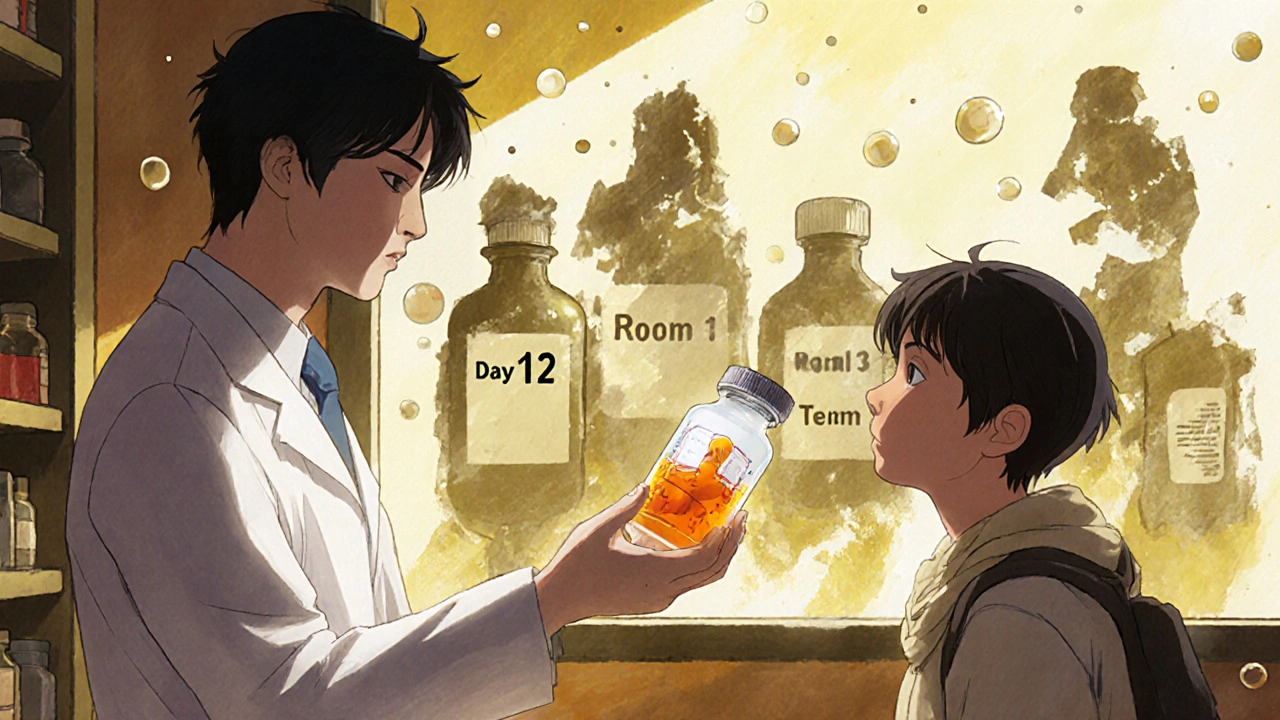
If your child is prescribed plain amoxicillin, the suspension is good for 14 days in the fridge. That’s the standard. But if it’s amoxicillin/clavulanate (brands like Augmentin), the clock stops at 10 days - no exceptions. Why? Clavulanate is unstable. It breaks down quicker, and the degradation products can even affect the amoxicillin around it.
Pharmacists see this every day. Parents come in frustrated because the prescription says 14 days, but the bottle says "discard after 10." They don’t understand why they have to throw out medicine before the course is done. The answer? It’s not about the infection - it’s about the drug. Even if your child hasn’t finished the bottle, if it’s past day 10, the remaining liquid may not have enough active ingredient to kill the bacteria. That means the infection could come back - stronger.
One parent on a medical forum said their child’s infection returned after they used the last few milliliters of amoxicillin/clavulanate on day 12. The doctor confirmed: the antibiotic had lost potency. The child needed a new prescription - and another round of antibiotics.

What Happens If You Use Expired Liquid Antibiotics?
It’s not like milk that sours. You won’t get sick from drinking expired antibiotic. But you might not get better.
Using weakened antibiotics is one of the top causes of antibiotic resistance. If the dose isn’t strong enough to kill all the bacteria, the toughest ones survive. They multiply. Next time, you need a stronger drug. Or a different one. Or a hospital visit.
Studies show 22% of parents accidentally use reconstituted antibiotics past their discard date. Why? They forget. They don’t write the date on the bottle. They assume it’s fine because it looks okay. One pharmacist in Melbourne told me she sees this at least twice a week. "I’ve had mothers cry because they didn’t realize the medicine was useless. Their kid got sicker again. And we had to start over."
There’s also a risk of bacterial growth if the suspension is left unrefrigerated for too long. While the drug degrades first, microbes can start growing in the sugary liquid - especially if it’s been sitting out for days. Cloudiness, odd smell, or fizzing? Don’t risk it. Throw it out.
How to Avoid Waste - and Danger
Here’s how to make sure you’re using the medicine safely - and not wasting it:
- Write the discard date on the bottle the second you get it. Use a permanent marker. Don’t rely on memory.
- Keep it in the back of the fridge - not the door. Temperature swings kill potency.
- Never transfer to syringes unless you’re giving it right away. Keep it in the original bottle.
- Check for changes - if it looks cloudy, smells off, or has particles, toss it.
- Use reminder apps - many pharmacies now offer free text or app alerts for discard dates. Ask for them.
- Ask your pharmacist - if the prescription is for 14 days but the suspension expires in 10, ask if a different formulation is available. Some pharmacies stock extended-stability versions.
Some pharmacies now offer dual-chamber systems - the powder and liquid stay separate until you shake the bottle to mix. These are still new, but they can keep the medicine potent for up to 30 days. Ask if your pharmacy carries them.
Why the Rules Are So Strict - And Why They Won’t Change Soon
You might wonder: why not make these antibiotics last longer? The answer is simple: chemistry doesn’t care about convenience.
Beta-lactam antibiotics are inherently unstable in water. Scientists have tried everything: better preservatives, special coatings, microencapsulation. One 2021 study showed a new formula that lasted 21 days - but it’s still in trials. The FDA and global regulators require every expiration date to be backed by real data. And right now, the data says 10-14 days is the safe limit.
Manufacturers don’t set these dates because they want to sell more bottles. They set them because they have to. If they say a drug lasts 30 days and it fails after 12, people get sick. Lawsuits follow. The 14-day rule for amoxicillin? It’s not arbitrary. It’s the result of years of lab testing under real-world conditions.
Even so, the market is shifting. More parents are choosing chewable tablets or taste-masked pills instead of liquid. They’re easier to store, last longer, and don’t require refrigeration. By 2030, experts predict liquid antibiotics will drop from 15% to 12% of all pediatric antibiotic prescriptions.
But for now - especially for toddlers, infants, and kids who can’t swallow pills - liquid antibiotics are still essential. That means you need to treat them like the delicate, time-sensitive medicines they are.
What to Do If You Accidentally Use an Expired Dose
Did you give your child a dose that was past its discard date? Don’t panic. But don’t ignore it either.
- If it was only one dose and the medicine was stored properly (in the fridge), the risk is low. The degradation is gradual.
- If it was multiple doses, or the bottle was left out for days, call your doctor. They may want to restart the course or switch to a different antibiotic.
- If your child’s symptoms don’t improve - or get worse - within 48 hours, contact your doctor immediately. It could be that the antibiotic didn’t work.
Keep the bottle. Bring it to the appointment. Your doctor needs to know what you used - and when.
How long does liquid amoxicillin last after mixing?
Refrigerated liquid amoxicillin lasts 14 days after mixing. If stored at room temperature, it only lasts 5-7 days. Always check the label - some brands may vary slightly.
Can I freeze liquid antibiotics to make them last longer?
Yes, freezing can extend the shelf life to 60 days for some antibiotics like amoxicillin. But it’s not recommended for most families. Freezing can change the texture, making it hard to dose accurately. Once thawed, you can’t refreeze it. Stick to refrigeration unless your pharmacist advises otherwise.
Why does amoxicillin/clavulanate expire faster than plain amoxicillin?
Clavulanate, the added ingredient that helps fight resistant bacteria, breaks down much faster than amoxicillin. Even in the fridge, it loses potency after 10 days. That’s why the discard date for amoxicillin/clavulanate is always 10 days - no exceptions.
Is it safe to use liquid antibiotics past the discard date if they look fine?
No. Appearance doesn’t tell you if the medicine is still strong. The active ingredient can degrade without changing color, smell, or texture. Using expired antibiotics risks treatment failure and can lead to antibiotic resistance.
What should I do if my child didn’t finish the full course because the medicine expired?
Call your doctor. Don’t guess. The infection may not be fully cleared, and restarting the same antibiotic may not work. Your doctor might prescribe a new course or switch to a different type of antibiotic.
Do pharmacies offer longer-lasting alternatives?
Yes. Some pharmacies now carry dual-chamber systems that keep the powder and liquid separate until use. These can stay potent for up to 30 days after mixing. Ask your pharmacist if they have them - especially if your child needs a 14-day course.
Final Thought: Respect the Clock
Liquid antibiotics are a miracle for kids who can’t swallow pills. But they’re not meant to sit on the shelf for months. They’re meant to be used - quickly, correctly, and safely. The 10- to 14-day window isn’t a suggestion. It’s a scientific limit. Write the date. Keep it cold. Don’t transfer it. And when the clock runs out - throw it out. Your child’s health depends on it.
James Allen
November 29, 2025 AT 20:53Suzanne Mollaneda Padin
December 1, 2025 AT 11:21Alexander Williams
December 3, 2025 AT 05:08Charlotte Collins
December 4, 2025 AT 03:49Kelly Essenpreis
December 5, 2025 AT 09:00Kenny Leow
December 7, 2025 AT 08:45Margaret Stearns
December 7, 2025 AT 19:42Mary Ngo
December 7, 2025 AT 22:54amit kuamr
December 8, 2025 AT 23:35Edward Hyde
December 10, 2025 AT 10:51