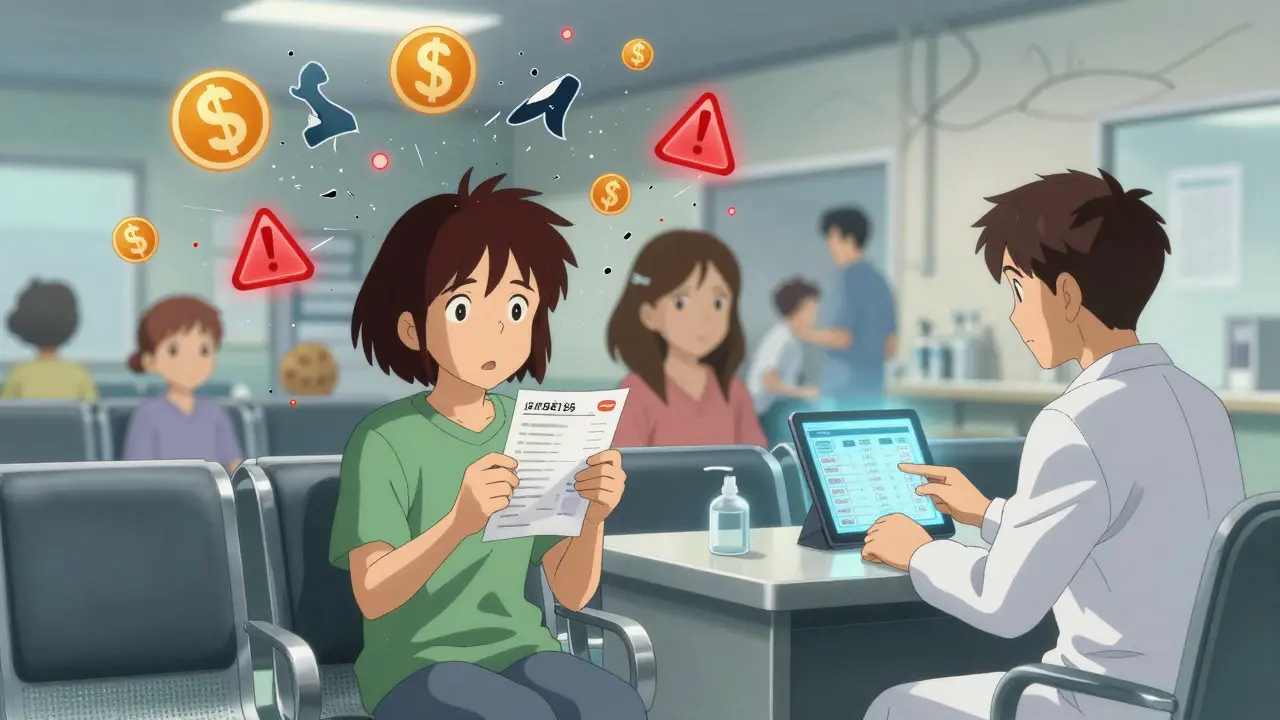
Imagine this: you leave your doctor’s office with a new prescription, excited to start treatment-only to find out at the pharmacy that the copay is $350. You didn’t know. No one told you. So you leave the pills behind. This happens to 22% of people in Australia and the U.S. every year. And it’s not because they don’t want to get better. It’s because they weren’t given the chance to plan.
Why Talking About Cost Before the Prescription Matters
Most people assume their doctor knows how much a medication will cost. But the truth? Many doctors don’t have real-time access to your insurance plan’s formulary. That’s why you need to speak up. The conversation about cost isn’t optional anymore-it’s essential. Starting in 2025, Medicare Part D will cap out-of-pocket drug spending at $2,000 per year. But if you’re on a commercial plan, there’s no such cap. You could pay thousands more for the same drug depending on your plan’s structure.Studies show patients who talk about cost before getting a prescription are 37% less likely to skip doses or stop taking their meds because of price. That’s not just about money-it’s about health outcomes. High blood pressure meds? Diabetes drugs? Mental health prescriptions? All of them can fail if cost gets in the way.
Know Your Insurance Plan Before You Walk In
Your insurance plan has something called a formulary. That’s just a fancy word for the list of drugs they cover-and how much you pay for each. Most plans break drugs into tiers:- Tier 1 (Generic): $5-$15 copay
- Tier 2 (Preferred Brand): $25-$50
- Tier 3 (Non-Preferred Brand): $50-$100
- Specialty Tier: 25-33% coinsurance, sometimes $100+ per fill
Not all plans are the same. Medicare Part D plans must cover at least two drugs per category, but commercial plans can have up to six tiers and cover over 3,250 drugs. That’s overwhelming. So before your appointment, log into your insurer’s website or call them. Ask: “Is [medication name] covered? What’s my copay?” Write it down. Bring it with you.
Medicare beneficiaries can use the Medicare Plan Finder (updated every October) to compare drug costs across plans. If you’re on a commercial plan, check tools like CVS Caremark’s “Check Drug Cost & Coverage” or GoodRx. These aren’t just for cash payers-they show you what your insurance would charge too.
Ask These Five Questions at Your Appointment
Don’t wait for your doctor to bring it up. Be ready. Here’s what to say:- “Is there a generic version of this drug?” Generics work the same way as brand names but cost up to 80% less.
- “Are there other medications in the same class that might be cheaper?” For example, if you’re prescribed a brand-name statin, there are often three or four cheaper alternatives that work just as well.
- “Will this drug be covered under my plan? Can you check the formulary right now?” Many doctors now use tools like Surescripts’ Real-Time Prescription Benefit (RTPB), which shows your exact cost before they even hit “print.” Ask if they have access to it.
- “Do you offer samples?” Doctors often have free samples of newer or expensive drugs. Don’t be shy-ask. It’s part of their job.
- “Is there a mail-order option? What’s the cost difference?” Many plans offer 90-day supplies through mail-order pharmacies at lower prices than local pharmacies.
One patient in Melbourne, Lisa, was prescribed a $1,200/month medication for rheumatoid arthritis. She asked her rheumatologist about alternatives. He switched her to a generic biologic with the same effectiveness-her monthly cost dropped to $45. She didn’t know any of this unless she asked.
What If the Drug Isn’t Covered?
If your doctor writes a prescription and you find out it’s not on your formulary, don’t panic. You have options:- Prior Authorization: Your doctor can request an exception. This is common for specialty drugs-68% require it. The process takes 2-5 days. Ask your doctor to start it right away.
- Appeal the Denial: If it’s denied, you can appeal. Your insurer must respond within 72 hours for urgent cases.
- Patient Assistance Programs: Drug manufacturers often offer free or low-cost meds to those who qualify. GoodRx and NeedyMeds have searchable databases.
According to the Patient Advocate Foundation, 68% of cases where drugs were initially denied were eventually approved after a provider’s request. Don’t give up-your doctor is your advocate here.
Timing Matters: Pay Attention to Your Plan Year
If you’re on a plan with a deductible, January through March is the worst time to start a new expensive medication. Most people haven’t met their deductible yet. That means you pay full price until you hit that threshold.In 2023, the average individual deductible on a marketplace plan was $480. If your new medication costs $150 a month, you’re looking at $600 out of pocket in the first four months-unless you plan ahead. Ask your insurer: “What’s my current deductible status?” If you’re close to meeting it, ask your doctor to delay the prescription until April.
On the flip side, if you’re on Medicare and take insulin, you’re protected. Since 2023, you pay no more than $35 per month per insulin prescription-no matter your plan. That’s federal law.
Use Tools That Actually Work
There are dozens of apps and websites promising to save you money. But only a few are reliable:- GoodRx: Shows cash prices and compares them to your insurance copay. In 2023, users saved an average of $287 per prescription.
- SingleCare: Free discount card accepted at 70,000+ pharmacies. Works even if you have insurance.
- RxSaver: Offers printable coupons and price comparisons.
- Medicare.gov Plan Finder: Only for Medicare users. Best used during open enrollment (October 15-December 7).
Pro tip: Show the pharmacist your GoodRx coupon-even if you have insurance. Sometimes the coupon price is lower than your copay. One user in Sydney saved $189 on her blood pressure med this way.
What About the Medicare Prescription Payment Plan?
Starting in 2025, Medicare Part D beneficiaries can enroll in a monthly payment plan that spreads out drug costs over the year. Instead of paying $800 all at once for a specialty drug, you pay $67/month. But here’s the catch: you have to sign up before September. If you wait until October, you won’t have enough months left to spread the cost evenly.This plan doesn’t exist for commercial insurance. But if you’re on Medicare, ask your plan provider: “Can I enroll in the monthly payment option?” It’s not automatic-you have to request it.
What If Your Doctor Doesn’t Want to Talk About Cost?
Some doctors still think cost is “not their job.” That’s outdated. Since 2018, the American Medical Association has officially recommended that doctors discuss medication costs with patients at every visit. If your doctor brushes you off, say this: “I’m not asking for a discount-I’m asking for a solution. I can’t afford this. Can we find something else?”Specialists are less likely to discuss cost than primary care doctors. Only 33% of specialists do it regularly, compared to 61% of GPs. So if you’re seeing a specialist, be even more prepared. Bring your list. Bring your questions. Bring your research.
Final Thought: You’re Not Asking for a Favor. You’re Asking for Care.
Talking about cost isn’t rude. It’s smart. It’s responsible. It’s how you take control of your health. The system is complex. Insurance plans change. Prices shift. But you have power-you can ask. You can compare. You can advocate.Don’t let a $350 surprise stop you from getting better. Have the conversation before the prescription is written. It could save you thousands-and maybe even your life.
What should I do if my insurance denies my prescription?
First, ask your doctor to submit a prior authorization request. Many drugs require this step before coverage. If denied, you can file an appeal. Medicare and most commercial plans must respond within 72 hours for urgent cases. You can also check if the manufacturer offers a patient assistance program. Don’t give up-68% of denied claims are overturned with provider support.
Can I use GoodRx even if I have insurance?
Yes. GoodRx shows you the cash price for a drug, which is sometimes cheaper than your insurance copay. At the pharmacy, ask the pharmacist to compare your insurance price with the GoodRx price. You can use whichever is lower. Many people save $100-$300 per prescription this way.
Is there a limit to how much I’ll pay for prescriptions in 2026?
If you’re on Medicare Part D, yes. Starting in 2025, your out-of-pocket costs for prescriptions are capped at $2,000 per year. In 2026, that cap remains at $2,100. For commercial insurance plans, there’s no federal cap-your costs could be unlimited unless your plan offers one voluntarily.
Why do some drugs cost more even though they’re the same as others?
Drugs with the same active ingredient can be priced differently based on brand, packaging, or how the manufacturer markets them. Insurance plans also assign them to different tiers. A generic version might be $10, while the brand-name version is $120-even though they work the same. Always ask for the generic unless there’s a medical reason not to.
How can I find out if my plan covers a specific drug?
Log into your insurer’s website and use their formulary search tool. You’ll need the drug’s name and dosage. If you can’t find it, call customer service and ask for the NDC number (National Drug Code) to confirm coverage. You can also ask your doctor to use a real-time benefit tool like Surescripts RTPB during your visit.
Are there programs to help pay for expensive medications?
Yes. Many drug manufacturers offer patient assistance programs for low-income or uninsured patients. You can search for them at NeedyMeds.org or through the Partnership for Prescription Assistance. Some states also have Medicaid-like programs for high-cost drugs. Ask your pharmacist or social worker for help applying.