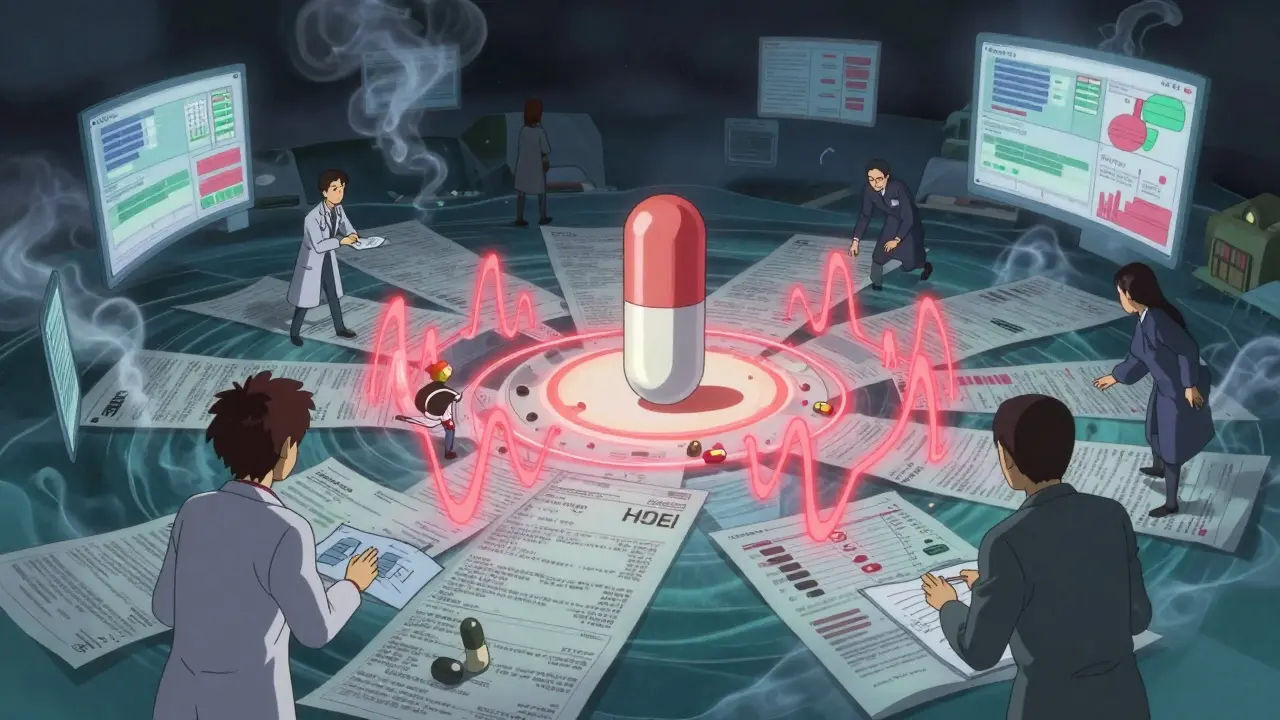
Most people assume that if a drug makes it through clinical trials and gets approved by regulators, it’s safe. But the truth is, some of the most dangerous side effects only show up after thousands-sometimes millions-of people start taking the drug. That’s where drug safety signals come in. These aren’t rumors or panic-driven reports. They’re systematic red flags pulled from real-world data that tell regulators: something’s off, and we need to look closer.
What Exactly Is a Drug Safety Signal?
A drug safety signal isn’t just one person reporting nausea after taking a pill. It’s a pattern. According to the Council for International Organizations of Medical Sciences (CIOMS), a signal is information that suggests a new or previously unknown link between a medicine and an adverse event-something that’s strong enough to warrant investigation. Think of it like a smoke alarm going off in a building. It doesn’t mean there’s a fire yet, but you don’t ignore it.
Signals can come from different places. The biggest source? Spontaneous reports from doctors, pharmacists, and even patients. These make up about 90% of the data in systems like the FDA’s FAERS database, which holds over 30 million reports since 1968. But signals also emerge from clinical trials, population studies, and even scientific papers. The key is repetition and consistency. One case? Maybe coincidence. Ten cases with the same pattern? That’s a signal.
Why Clinical Trials Miss the Big Risks
Clinical trials are tightly controlled. They usually involve 1,000 to 5,000 people. They’re short-often just months. Participants are carefully selected: no major health problems, no other medications, mostly younger adults. That’s great for proving a drug works under ideal conditions. But it’s terrible for spotting rare or delayed side effects.
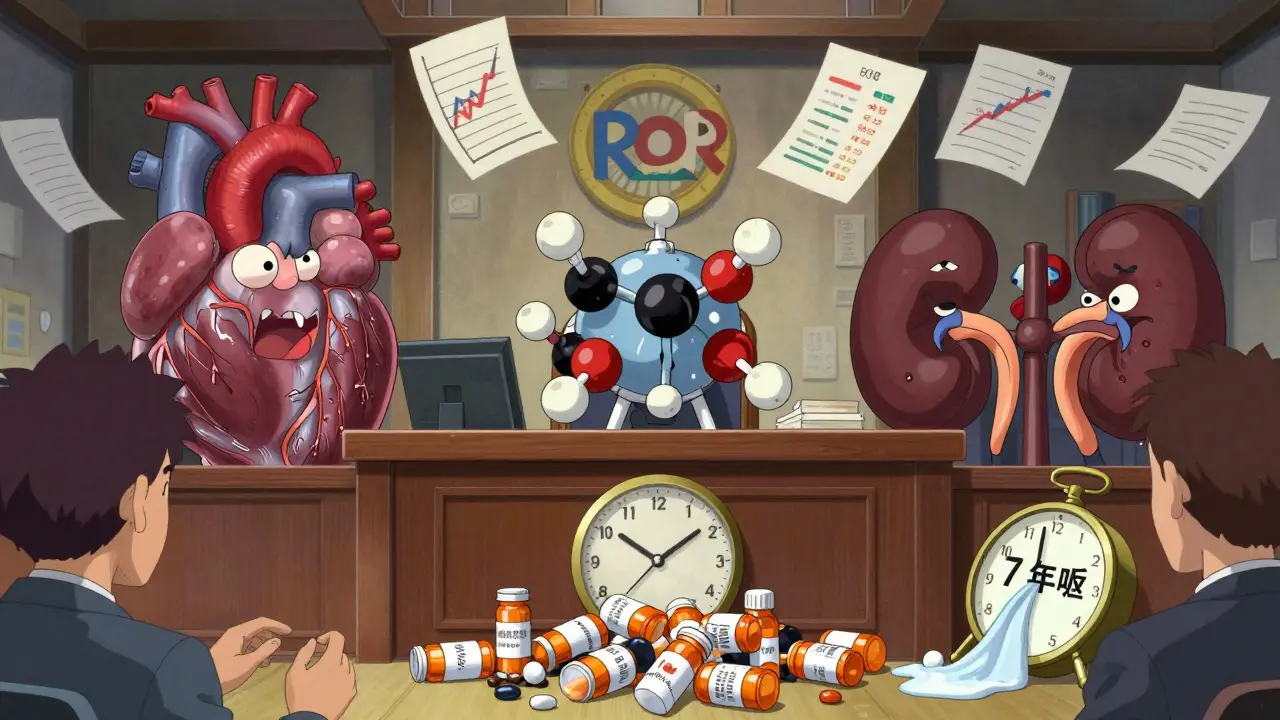
Take the case of rosiglitazone, a diabetes drug approved in the late 1990s. Early trials didn’t show heart risks. But after millions of prescriptions, data started piling up: patients were having more heart attacks. By 2007, a major study confirmed the signal. The drug was restricted. The problem? The original trials simply didn’t include enough people with heart disease or those on multiple medications-real-world conditions where the risk actually showed up.
Another example: bisphosphonates, used for osteoporosis. It took seven years after approval before doctors noticed jawbone deterioration in some patients. That’s not a side effect you’d catch in a six-month trial. These are delayed, rare, or triggered by interactions that only appear over time.
How Signals Are Found: Numbers, Patterns, and Noise
Regulators don’t just read reports. They run numbers. The most common method is disproportionality analysis. It compares how often a side effect shows up with a specific drug versus other drugs. If a rare condition like liver failure appears 10 times more often with Drug X than with all other drugs combined, that’s a red flag.
Statistical tools like the Reporting Odds Ratio (ROR) or Bayesian Confidence Propagation Neural Network (BCPNN) are used to filter out random noise. But here’s the catch: 60 to 80% of these statistical signals turn out to be false positives. A 2019 signal linked canagliflozin (a diabetes drug) to leg amputations based on FAERS data. The numbers looked scary-ROR of 3.5. But when a dedicated trial (CREDENCE) looked at actual patient outcomes, the risk was only 0.5% higher than placebo. The signal was real, but the danger wasn’t.
That’s why experts stress triangulation. Don’t rely on one source. Look for the same pattern in clinical trial data, patient registries, and published case studies. The European system identified a link between dupilumab (an eczema drug) and eye surface disease after spotting the same issue across multiple reports. Once confirmed, label updates helped doctors monitor patients better.
What Makes a Signal Actionable?
Not every signal leads to a warning or a drug recall. Four things make regulators take action:
- Multiple sources confirm it. If the same signal appears in FAERS, EudraVigilance, and a peer-reviewed study, the chance it’s real jumps dramatically. Studies show this increases the likelihood of a label change by over four times.
- The event is serious. Death, hospitalization, or permanent disability? 87% of serious events led to label updates. Mild rashes? Only 32% did.
- There’s a biological explanation. Does the drug’s chemistry make sense as a cause? If a drug affects liver enzymes and then liver failure pops up in reports, that’s plausible. If not, it’s harder to prove.
- The drug is new. Drugs under five years old are nearly twice as likely to have their labels updated based on signals than older ones. Why? Because we’re still learning how they behave in the real world.
Dr. Robert Temple from the FDA once said that spontaneous reports often contain details no trial ever captured-like how long after taking the drug the reaction started, or if symptoms improved when the drug was stopped. That’s the kind of human data that turns a number into a story.
The Human Cost of Missing Signals
When signals are ignored or delayed, people get hurt. The Vioxx scandal in the early 2000s is the starkest example. The drug was linked to heart attacks in trials, but the signal was downplayed. By the time it was pulled, tens of thousands had suffered heart events. The lesson? Speed matters. The longer you wait, the more people are exposed.
But the opposite also happens: overreaction. A 2021 survey of pharmacovigilance professionals found that 73% said the biggest frustration was the lack of standardized ways to judge causality. One signal might be dismissed as noise, while another triggers panic. Without clear rules, decisions feel arbitrary.
That’s why new frameworks are emerging. The 2023 Frontiers in Drug Safety journal proposed a three-pillar approach: clinical details of the event, evidence from individuals and populations, and a system to weigh the strength of each piece. It’s not perfect, but it’s more structured than guessing.

Technology Is Changing the Game
Regulators are no longer waiting for quarterly reports. The FDA’s Sentinel Initiative 2.0, launched in January 2023, taps into electronic health records from 300 million patients across 150 U.S. healthcare systems. That means signals can be detected in near real-time. The EMA now uses AI in EudraVigilance to cut signal detection time from two weeks to just two days.
Artificial intelligence tools are growing fast. Since 2020, AI-powered detection systems have increased by 43% year over year. These tools don’t replace humans-they help prioritize. Instead of reviewing 10,000 reports manually, an algorithm flags the 50 most suspicious ones. That’s a game-changer for overwhelmed teams.
But new drugs bring new challenges. Biologics, gene therapies, and digital therapeutics don’t behave like traditional pills. Their side effects are harder to predict. And with prescription use among older adults up 400% since 2000, polypharmacy-the use of five or more drugs-is now the norm. Current systems weren’t built for that complexity.
What Comes Next?
Drug safety isn’t a one-time check. It’s a lifelong monitoring system. Every approved drug carries a hidden risk list that only becomes visible over time. The system isn’t flawless. False alarms waste resources. Real signals can take years to surface. But it’s the best tool we have to protect people after a drug leaves the lab.
The future lies in integration: linking spontaneous reports with electronic health records, pharmacy data, and even wearable device outputs. By 2027, two-thirds of high-priority signals are expected to come from these combined sources. That means earlier warnings, smarter prescribing, and fewer surprises.
For patients, the message is simple: report side effects. Even if they seem minor. For doctors: pay attention to patterns, not just individual cases. And for regulators: keep improving the tools, keep listening to the data, and never assume safety is final.
What triggers a drug safety signal in pharmacovigilance?
A drug safety signal is triggered when there’s a consistent pattern suggesting a new or previously unrecognized link between a medication and an adverse event. This can come from multiple sources: spontaneous reports from healthcare providers, data from clinical trials, population studies, or scientific literature. Statistical methods like Reporting Odds Ratio (ROR) or Proportional Reporting Ratio (PRR) help identify if the frequency of an event with a specific drug is significantly higher than expected. Signals require at least three reported cases and a statistical threshold (like ROR ≥ 2.0) to be flagged for further review.
Why are clinical trials not enough to catch all drug side effects?
Clinical trials involve small, carefully selected groups-usually 1,000 to 5,000 people-over a short period. They exclude older adults, pregnant women, and those with multiple health conditions or taking other medications. This means rare side effects (like 1 in 10,000), delayed reactions (taking years to appear), or interactions with other drugs often go unnoticed. For example, bisphosphonates caused jawbone damage in some patients, but it took seven years and widespread use before the pattern emerged.
How do regulators decide if a signal is real and needs action?
Regulators look at four key factors: whether the signal appears in multiple independent data sources (like FAERS and EudraVigilance), whether the adverse event is serious (hospitalization, death), whether there’s a plausible biological mechanism linking the drug to the effect, and whether the drug is relatively new. A 2018 analysis showed signals with evidence from multiple sources were over four times more likely to lead to label changes. A signal without biological plausibility or from a single report is often dismissed as noise.
What’s the difference between a potential risk and a verified signal?
A potential risk is an event that’s suspected based on early reports but hasn’t been confirmed-like a spike in liver enzyme elevations after a new drug launch. A verified signal, or identified risk, is one where statistical analysis and clinical evidence strongly support a causal link. For example, rosiglitazone’s link to heart attacks was initially a potential risk. After multiple studies confirmed it, it became a verified risk, leading to restricted use. Verification requires consistent findings across trials, real-world data, and sometimes mechanistic research.
Can AI really improve drug safety monitoring?
Yes. AI tools now analyze millions of reports faster and more consistently than humans. The EMA’s AI system, implemented in 2022, cut signal detection time from 14 days to under two days while maintaining 92% sensitivity. These tools don’t replace human judgment-they help prioritize which signals need urgent review. With over 2.5 million reports processed annually in Europe alone, AI is essential to avoid missing real dangers in a sea of noise. However, AI still needs human oversight to interpret context, like patient history or medication interactions, which algorithms can’t fully understand.
Jocelyn Lachapelle
December 16, 2025 AT 08:25Raj Kumar
December 17, 2025 AT 11:08Christina Bischof
December 19, 2025 AT 07:10John Brown
December 20, 2025 AT 23:00Benjamin Glover
December 22, 2025 AT 14:09Sai Nguyen
December 22, 2025 AT 21:46John Samuel
December 24, 2025 AT 08:49Melissa Taylor
December 26, 2025 AT 04:13Mike Nordby
December 27, 2025 AT 17:58Nupur Vimal
December 29, 2025 AT 04:41