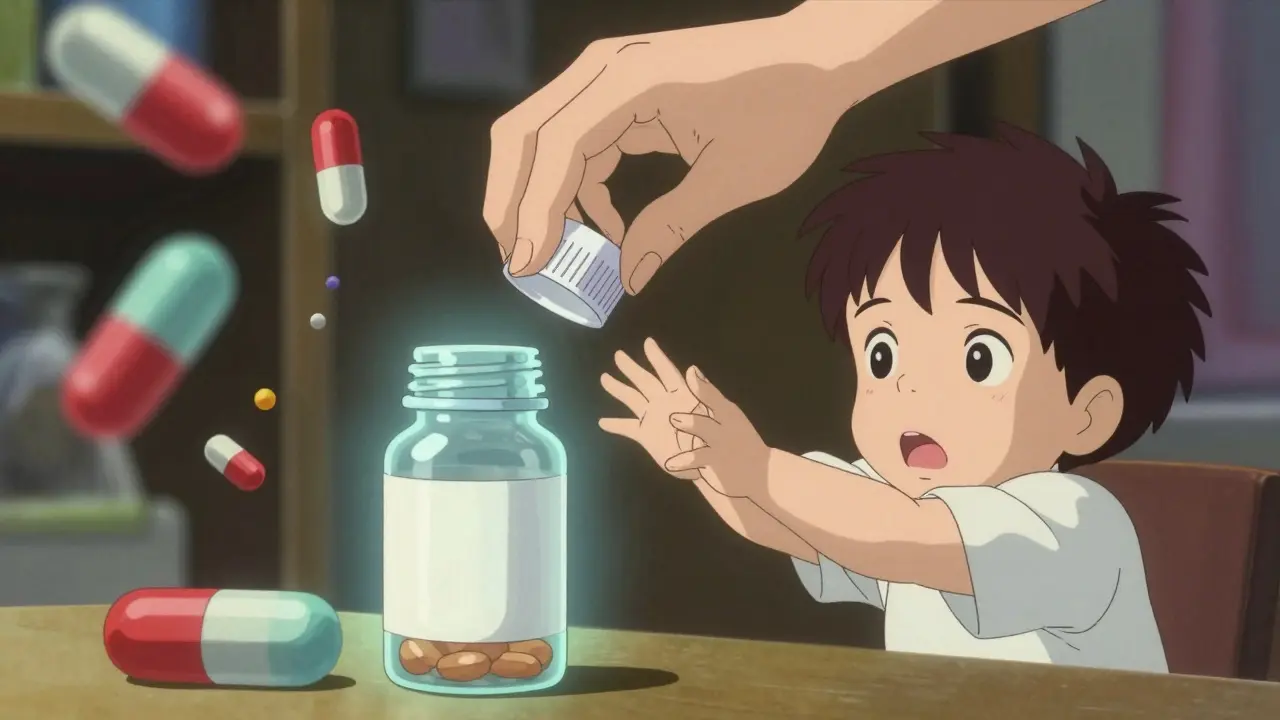
Every year, thousands of children accidentally get into medications they shouldn’t. It’s not because they’re sneaky-it’s because most medicine bottles look like toys. But there’s a reason those caps are so hard to twist: child-resistant packaging. It’s not perfect, but it’s saved hundreds of thousands of kids since the 1970s. And if you’ve ever struggled to open your own prescription bottle, you’re not alone.
What Exactly Is Child-Resistant Packaging?
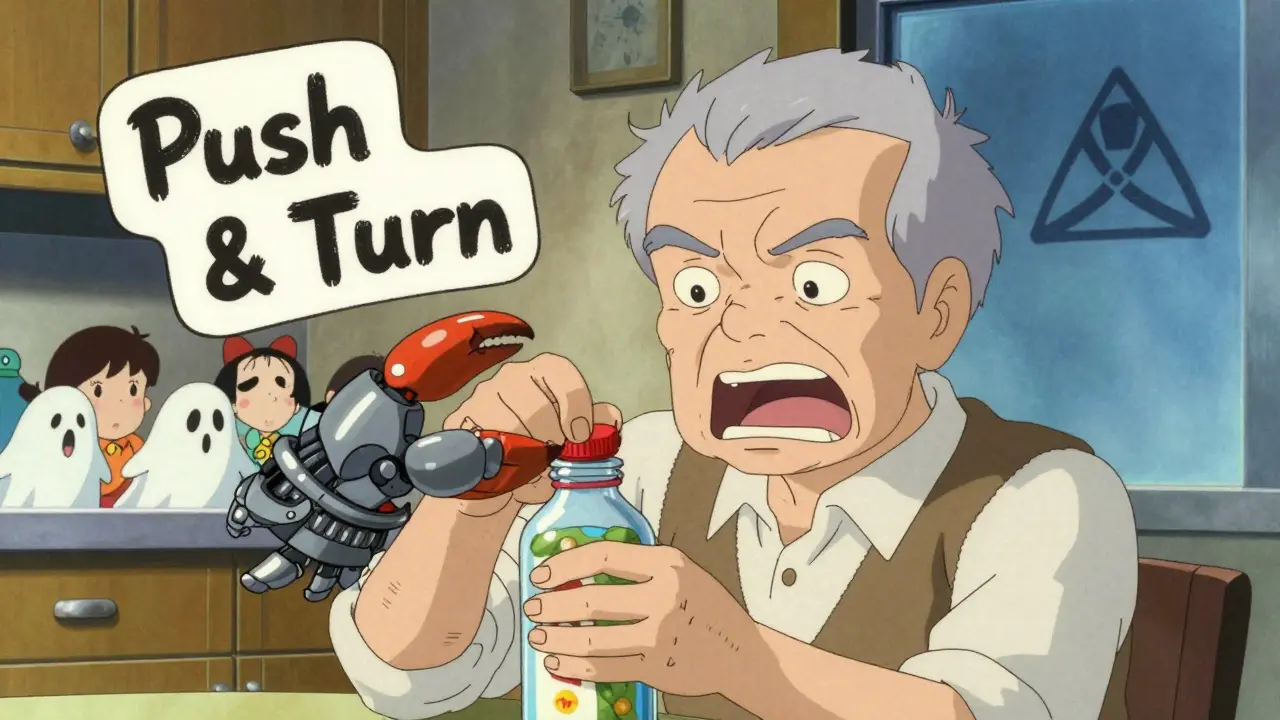
Child-resistant packaging, or CR packaging, isn’t meant to be child-proof. That’s a myth. No cap can stop a determined toddler forever. What it does is make it hard enough-for a child under five-to open the bottle in a short time. The U.S. Consumer Product Safety Commission (CPSC) sets the rules. To pass, at least 85% of kids aged 42 to 51 months must fail to open the container within 10 minutes. After that, they’re shown how to open it-and even then, they still can’t get in. That’s the test.At the same time, it has to be easy for adults. At least 90% of seniors between 50 and 70 must open and close the bottle correctly within 5 minutes. That’s the balance: safety for kids, usability for adults. The most common design? The push-and-turn cap. You press down while twisting. One motion alone won’t do it. You need both. It’s simple for an adult with full hand strength. It’s nearly impossible for a small child.
Why Was This Even Created?
Before 1970, medicine bottles were just plain screw tops. No locks. No tricks. And kids were dying. Between 1961 and 1966, more than 5,000 children in the U.S. died from accidental poisonings-mostly from pills and liquids they found on the counter. The Poison Prevention Packaging Act (PPPA) of 1970 changed that. It gave the CPSC the power to require CR packaging for dangerous products.The results? A 45% drop in pediatric poisoning deaths by 1974. Since then, an estimated 900,000 childhood poisonings have been prevented every year. That’s not just a statistic. That’s your neighbor’s child. That’s your grandkid. CR packaging didn’t eliminate the risk-but it made it a lot harder for accidents to happen.
Which Medications Need CR Packaging?
Not every pill bottle has a tough cap. The rules depend on what’s inside. The CPSC requires CR packaging for about 30 categories of hazardous products. That includes:- Prescription drugs (all Schedule II-V controlled substances)
- Over-the-counter pain relievers like aspirin, ibuprofen, and acetaminophen above certain doses
- Iron supplements (especially dangerous for kids)
- Antidepressants and antipsychotics
- Household cleaners, pesticides, and certain cosmetics
- Imidazoline-containing products (like some nasal decongestants) at 0.08 mg or more per dose
For OTC meds, it’s not about the brand-it’s about the active ingredient and how much is in each dose. A bottle of children’s ibuprofen might not need CR packaging if the dose is low enough. But the adult version? Absolutely. And prescription meds? Almost always. The DEA requires CR packaging for all controlled substances, no exceptions.
Why Are Nasal Sprays So Hard to Make Safe?
Nasal spray pumps are a nightmare for packaging engineers. Why? Because they’re designed to be easy to use with one hand. A quick squeeze, a quick spray. But that same simplicity makes them easy for kids to trigger. The CPSC ruled in 2012 that spray pumps themselves aren’t child-resistant-even if they’re attached to a bottle. The solution? Add a child-resistant overcap. Or redesign the pump entirely.Only about 22% of nasal spray products met CR standards before special modifications. Now, some companies use advanced metered-dose spray caps that require a twist-and-squeeze combo. These are expensive to design and test, which is why many still don’t meet the standard. If your child’s nasal spray comes in a plain plastic bottle with no extra cap, it’s probably not CR-and you should store it out of reach.
What About Blister Packs and Liquid Meds?
Blister packs-those little plastic bubbles with foil backing-are common for pills. But standard blister packs don’t count as CR. The foil has to be tough enough that a child can’t just peel it off. The CPSC requires at least 15 pounds of force to remove a tablet. That’s like lifting a gallon of milk with your fingers. Most kids can’t do that. But seniors with arthritis? They might struggle too.Liquid medications are the biggest problem. About 39% of non-compliant packaging incidents involve liquids. Why? Because they’re often stored in bottles with simple screw tops that don’t meet CR standards. Parents might transfer meds to a plastic cup or use a dosing syringe without a cap. That’s a huge risk. Always keep liquids in their original CR bottle-even if you’re just using a little.
Why Do Some People Struggle to Open These Caps?
If you’re over 60, have arthritis, or have limited hand strength, you know the frustration. A 2022 survey by the Arthritis Foundation found 68% of people with hand impairments had trouble opening CR medication bottles. The average force needed? More than 5 pounds. That’s the threshold experts say should be the max for senior-friendly designs.Some CR caps require up to 12 pounds of force. That’s like trying to open a stuck jar of pickles with one hand. That’s why newer designs are changing. Companies like Aptar Pharma and Blisterpak now make “senior-friendly” CR caps. These use push-and-turn systems that require less grip strength but still pass child-resistance tests. One Amazon review summed it up: “Finally a child-safe cap my 70-year-old mother can open without assistance.”
What Happens When People Don’t Reclose the Bottle?
Here’s the big secret: CR packaging only works if you use it right. The CPSC found that 73% of child access incidents happen because the cap wasn’t properly closed after use. A parent opens the bottle, gives the medicine, and just twists it loosely. Or they forget to push down while turning. Or they leave the cap off because they’re in a hurry.Effectiveness drops by about 15% after the first opening if the cap isn’t resealed correctly. That’s why pharmacists now tell patients: “Don’t just twist-push and turn. Listen for the click.” Some new caps even have audible clicks or visual indicators to show if they’re locked. If your bottle doesn’t have that, pay extra attention.
How Do Manufacturers Test and Certify These Caps?
Pharmaceutical companies don’t just guess if a cap works. They send it to CPSC-accredited labs. The testing costs between $8,500 and $15,000 per design. They test 50 kids and 100 seniors. If the cap fails even once, it’s redesigned. Then they submit proof to the FDA as part of the Electronic Common Technical Document (eCTD)-a legal requirement for any drug approval.Labeling matters too. If a product doesn’t meet CR standards, the label must say: “This package is not child-resistant. Keep out of reach of children.” If a pharmacy dispenses meds in a non-CR bag or envelope without that warning, they risk an FDA warning letter-or a $100,000 fine. That’s not a typo.
What’s New in 2026?
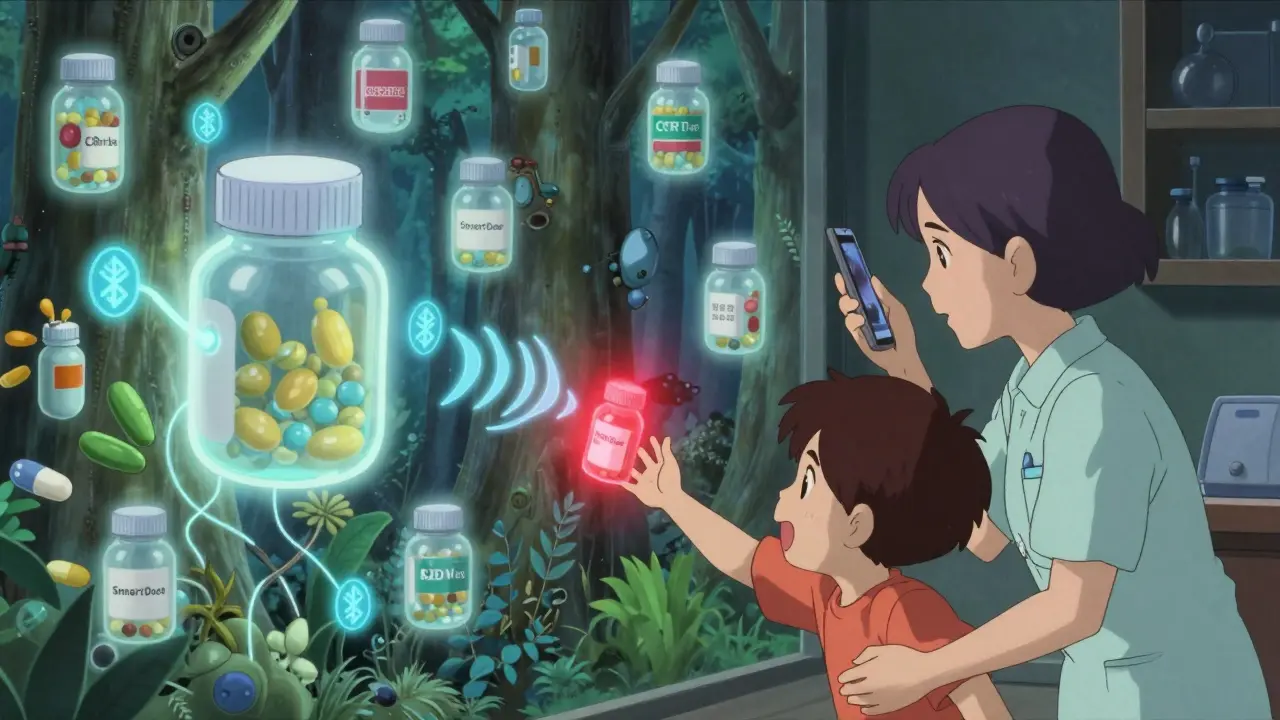
Technology is catching up. In January 2023, Aptar Pharma launched the first FDA-cleared smart CR cap: SmartDose. It’s a child-resistant cap with Bluetooth. It records when the bottle is opened-and sends a notification to a caregiver’s phone if a child tries to open it. It’s not for everyone. But for families managing chronic conditions or high-risk meds, it’s a game-changer.The CPSC is also looking at new threats. Concentrated cannabis edibles with more than 2mg of THC per serving now require CR packaging. Laundry detergent pods? They’re next. Right now, they’re regulated by voluntary standards. But after hundreds of child poisonings, regulators are moving fast.
Global trends are shifting too. Brazil and India passed mandatory CR packaging laws in 2021 and 2022. The EU follows ISO 8317 standards, which are similar to the U.S. But the U.S. still leads in senior-friendly innovation. Over 60% of new CR packaging patents since 2018 include features for older adults.
What Should You Do?
- Always keep meds in their original CR container. Don’t transfer them to cups or pill organizers unless they’re also CR. - After using the medicine, push down and turn until you hear or feel a click. Don’t just twist. - Store meds up high, in a locked cabinet-not on the counter, not in the bathroom. - If you or a loved one can’t open the cap, ask your pharmacist for a senior-friendly alternative. They can request non-CR packaging with your signed consent. - Never assume a cap is “child-proof.” Kids are clever. They watch. They copy. They find ways.Child-resistant packaging isn’t magic. But it’s the best tool we have. Used right, it saves lives. Used wrong, it gives a false sense of security. The cap is just one part of the puzzle. The real safety comes from how you use it.
Are child-resistant caps really effective?
Yes, when used correctly. Since the 1970s, CR packaging has reduced pediatric poisoning deaths by 45% and prevented an estimated 900,000 accidental ingestions each year. But effectiveness drops if caps aren’t properly closed after use. It’s not foolproof, but it’s the most proven safety tool we have for household medications.
Can a child still open a child-resistant cap?
Yes. No cap is completely child-proof. About 15% of children under five can open some CR caps, especially if they’ve seen an adult do it. That’s why storage matters just as much as the cap. Always keep meds out of sight and reach-even if the cap is locked.
Why do some medicine bottles have easy-open caps?
Some people, especially seniors or those with arthritis, can’t open standard CR caps. Pharmacists can provide non-child-resistant packaging upon request, but only if the patient or caregiver signs a form acknowledging the risk. These bottles must be labeled clearly and stored securely to prevent child access.
Do all over-the-counter medicines need child-resistant packaging?
No. Only OTC products with certain active ingredients at specific doses require CR packaging. For example, aspirin, ibuprofen, acetaminophen, and iron supplements above certain thresholds do. But low-dose children’s formulas or herbal supplements may not. Always check the label or ask your pharmacist.
What should I do if I can’t open my medication bottle?
Ask your pharmacist for help. Many pharmacies offer senior-friendly CR caps or alternative packaging like easy-open blister packs or pre-filled syringes. Some manufacturers now make caps that require less grip strength but still meet child-resistance standards. Don’t force it-ask for a safer option.
Is it safe to store medicine in a pill organizer?
Only if the organizer has its own child-resistant lid. Most standard pill organizers do not. Storing meds in a non-CR container removes the safety feature. If you use a pill organizer, keep it locked away and only fill it with daily doses. Never leave it on the counter or in a child’s reach.
Are nasal spray bottles child-resistant?
Only if they have a separate child-resistant overcap. The spray pump itself is not child-resistant. Many nasal sprays still come without this extra cap. If yours doesn’t, store it in a locked cabinet and never leave it on the sink or bedside table.
What’s the difference between child-resistant and child-proof?
Child-resistant means the cap is designed to be hard for young children to open, but not impossible. Child-proof implies total protection-which doesn’t exist. No cap can stop every child. That’s why CR packaging is only one part of safety. Storage, supervision, and education are just as important.
Aurelie L.
January 24, 2026 AT 13:50My niece opened a bottle of ibuprofen in 3 seconds. I swear she watched her dad do it 3 times. CR caps? More like "try-hard" caps.
Now I lock everything in a safe. Just in case.
Joanna Domżalska
January 26, 2026 AT 04:09So we’re giving up adult convenience to protect kids who shouldn’t be near meds in the first place?
Parenting is the real problem. Not the cap.
Let kids be curious. Teach them danger. Don’t build prisons for your own laziness.
Josh josh
January 26, 2026 AT 07:41my grandma cried trying to open her blood pressure pills last week
she’s 78 and has arthritis
the cap is more of a villain than the medicine
pharmacies gotta do better
we need caps that dont make you feel like a failure just to take your meds
bella nash
January 27, 2026 AT 23:18It is axiomatic that regulatory frameworks must balance competing stakeholder imperatives-namely, pediatric safety and geriatric accessibility.
The current paradigm, while statistically efficacious, imposes a disproportionate functional burden upon cognitively intact but physically compromised populations.
One must question whether the metric of child resistance is being prioritized at the expense of human dignity.
It is not merely a mechanical problem-it is an ethical one.
SWAPNIL SIDAM
January 29, 2026 AT 15:46My cousin’s son opened a bottle of iron pills in under a minute. He’s 3.
My sister didn’t even notice until he was blue.
They rushed him to the hospital.
He’s fine now.
But I will never trust a cap again.
My meds? Locked in a drawer. Even the ones I take daily.
No cap is worth a child’s life.
And no adult should have to fight to survive their own medicine.
Geoff Miskinis
January 29, 2026 AT 21:00It’s amusing how Americans romanticize regulatory compliance while ignoring the actual behavioral economics at play.
CR packaging reduces ingestion by 45%? That’s a marginal gain.
Meanwhile, the cost of compliance-$15,000 per cap design-is passed to consumers in higher drug prices.
And the elderly? They’re collateral damage in a well-intentioned but inefficient policy.
It’s not innovation. It’s bureaucratic theater.
Sally Dalton
January 30, 2026 AT 19:23My mom can’t open her pills anymore and I feel so bad for her.
I asked the pharmacy for easy-open ones and they gave her a new cap with a little button you press down-it clicks and turns easy.
She cried happy tears.
Also, I started locking all meds in the kitchen cabinet now.
Even the gummy vitamins. My nephew is a ninja.
Thank you for writing this. I didn’t know about the nasal spray thing.
Now I know to check for that extra cap.
Small things matter.
Betty Bomber
January 31, 2026 AT 06:17My kid figured out the push-and-turn thing by watching me.
Now he pretends to be a doctor and gives his stuffed animals "medicine".
He’s 4.
So yeah.
The cap works.
But he’s also watching.
So I keep the bottle in the top shelf.
And I don’t leave it open.
Just saying.