When you pick up a generic pill at the pharmacy, you expect it to work just like the brand-name version. But behind that simple promise lies a complex, often broken system. In 2022, nearly 4,000 drug products were recalled in the U.S. alone because of manufacturing flaws - and most of them came from overseas factories. These aren’t random mistakes. They’re systemic failures in how generic drugs are made, tested, and monitored.
What Goes Wrong in Generic Drug Factories?
The core problem is a failure to follow Current Good Manufacturing Practices, or cGMP. These aren’t suggestions - they’re legal requirements. But in many plants, especially outside the U.S., cGMP is treated like a checklist to be checked off, not a system to be lived. Common issues include:- **Inadequate testing methods**: 18.7% of FDA inspection findings in 2022 pointed to labs using outdated or inaccurate tests to measure drug strength or purity.
- **Poor packaging**: 12.3% of violations involved packaging that didn’t protect the drug from moisture, light, or contamination - leading to pills that break down before they’re even taken.
- **Missing stability data**: 15.6% of facilities couldn’t prove their drugs would remain effective over time. That means a pill you buy today might not work the same way six months from now.
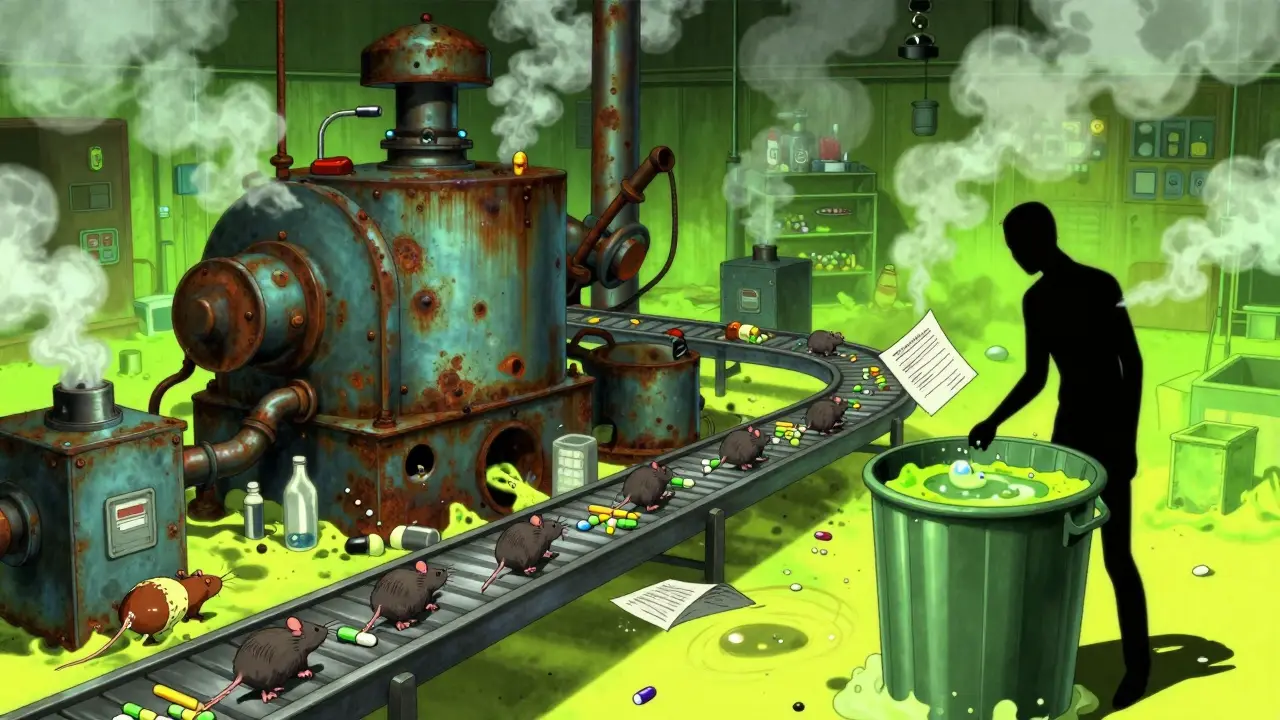
- **Dirty or poorly maintained equipment**: Inspectors have found rusted machinery, uncleaned tanks, and even rats in production areas at facilities in India and China.
- **Data manipulation**: In one shocking 2022 inspection at Intas Pharmaceuticals in Gujarat, an employee was caught throwing documents into a trash can full of acid - documents that showed failed quality tests.
The Nitrosamine Scandal That Changed Everything
In 2018, the FDA found a cancer-causing chemical called NDMA in valsartan, a blood pressure drug made by several generic manufacturers. It wasn’t an accident. The impurity formed during a cheap, rushed chemical reaction that had been used for years without proper safety checks. Over 2.1 million patients were exposed. The recall spread to 22 countries. Twenty-eight separate recalls followed. This wasn’t an isolated case. Since then, nitrosamine impurities have been found in metformin, ranitidine, and other common generics. The problem? Many manufacturers didn’t test for these impurities because they weren’t required to - until it was too late.Why Foreign Plants Are More Likely to Fail
The U.S. gets 80% of its active drug ingredients and 40% of finished pills from overseas. But the FDA can’t inspect them the same way it inspects U.S. plants. Here’s the reality:- **Advance notice**: The FDA must tell foreign plants weeks in advance before showing up. That gives them time to clean up, hide problems, and train staff to lie.
- **Fewer inspections**: In 2022, the FDA inspected only 13% of foreign facilities. That means 87% were never checked that year.
- **Higher failure rates**: Foreign plants get 28.6% more inspection violations than U.S. ones. Indian facilities alone had 19.3% more problems than American ones.
- **No random testing**: The FDA tests just 0.02% of imported drug shipments in labs. That’s one out of every 5,000 packages.
Who Pays the Price?
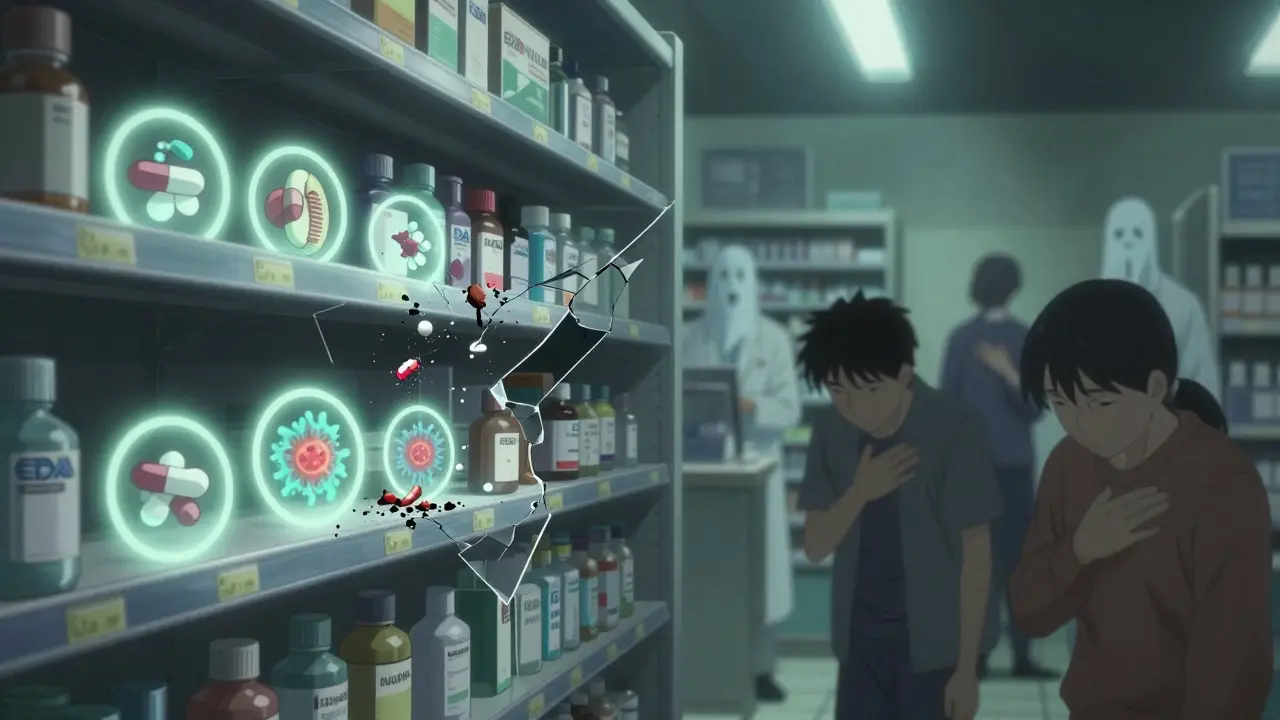
Patients don’t just lose money when generics fail - they lose health.- **Therapeutic failure**: A 2022 survey of U.S. hospital pharmacists found 67.3% had seen at least one patient’s condition worsen after switching to a generic. Nearly half blamed Indian-made products.
- **Narrow Therapeutic Index (NTI) drugs**: These are the most dangerous. A tiny difference in dose - even 10% - can cause seizures, organ failure, or death. Drugs like warfarin, levothyroxine, and tacrolimus fall into this category. FDA data shows 37% of complete response letters for generics in 2022 were for NTI drugs.
- **Patient reports**: On Drugs.com, generic valsartan from Zhejiang Huahai Pharmaceutical had a 3.2-star rating. Users wrote: “My blood pressure spiked,” “I felt dizzy all day,” “It didn’t work like the brand.”
- **FDA reports**: Between 2019 and 2022, 1,842 adverse events were tied to generic drug quality. One batch of nitroglycerin tablets from Impax Laboratories failed to dissolve properly - meaning heart attack patients weren’t getting the medicine they needed.
The Business of Cheap Drugs
The generic drug market is worth over $420 billion. But the race to the bottom is killing quality.- **Prices dropped 18.3% annually** from 2018 to 2022. To stay profitable, manufacturers cut corners.
- **Quality budgets fell 22.7%** in the same period. Training, testing, and equipment upgrades were the first to go.
- **Only 23.8% of manufacturers** use Quality by Design (QbD) - a science-based system that builds safety into the product from day one.
- **FDA fees jumped 62.9%** since 2018. Many small manufacturers can’t afford the cost of compliance - so they skip it.
What’s Being Done - And Why It’s Not Enough
The FDA says it’s trying. In 2022, it issued 147 warning letters - up 28.5% from the year before. The 2022 FDA User Fee Reauthorization added $56.7 million to hire more inspectors and increase foreign inspections from 1,200 to 1,800 by 2027. But here’s the catch:- **Unannounced inspections are rare** for foreign plants. The EU started doing them in January 2023 - and found 41.2% more critical problems.
- **Risk-based inspections are still theoretical**. The FDA claims it prioritizes high-risk facilities, but there’s no public data showing which ones are flagged.
- **No product-level testing**. The FDA doesn’t routinely test pills after they arrive. They rely on the manufacturer’s word.
What You Can Do
You can’t control the factory. But you can protect yourself:- **Ask your pharmacist**: “Where is this generic made?” If they don’t know, ask for the brand version - especially for NTI drugs.
- **Check the FDA’s Drug Shortage List**. If your drug is on it, the reason is often a foreign plant failure.
- **Report side effects**. Use the FDA’s MedWatch system. One report won’t stop a plant - but 1,000 might.
- **Avoid the cheapest option**. If two generics are priced wildly differently, the cheaper one is more likely to be cutting corners.
The Future of Generic Drugs
The system is under pressure. The White House has flagged pharmaceutical supply chains as a national security risk. The FDA’s 2023-2027 plan says it will prioritize inspections of high-risk plants. But without mandatory unannounced inspections, random product testing, and full transparency, the same problems will keep happening. Manufacturers who invest in real quality - not just paperwork - will survive. Those who don’t? They’ll disappear. The market is shifting. Patients are waking up. And the FDA, finally, has no choice but to change.But until then, every pill you take is a gamble. And the odds are stacked against you.
Are all generic drugs unsafe?
No, not all generic drugs are unsafe. Many are manufactured to high standards and work just as well as brand-name versions. But the risk is uneven. Drugs made in facilities with a history of FDA violations, especially in countries with weak oversight, are far more likely to have quality issues. Stick to generics from manufacturers with clean inspection records - and ask your pharmacist for details.
How do I know if my generic drug is from a bad manufacturer?
You can’t always tell by the label. But you can check the FDA’s website for warning letters and inspection reports. Search for the manufacturer’s name and the drug’s active ingredient. If the facility has had multiple Form 483s or warning letters, it’s a red flag. For high-risk drugs like blood thinners or thyroid meds, consider paying a little more for the brand or a well-reviewed generic.
Why don’t pharmacies tell me where the drug is made?
Most pharmacies don’t track the origin of individual batches. They buy from distributors who buy from manufacturers. The supply chain is intentionally opaque. But you can ask. If they don’t know, it’s a sign they’re not monitoring quality. Push for transparency - your health depends on it.
Can I trust generics made in the U.S.?
Yes, U.S.-made generics are significantly safer. FDA inspections at domestic facilities result in 4.2% fewer violations than foreign ones. Plus, inspections are unannounced, and facilities are held to stricter data integrity standards. If you’re on a critical medication, choosing a U.S.-made generic reduces your risk - even if it costs a few dollars more.
What should I do if I think my generic drug isn’t working?
Don’t stop taking it without talking to your doctor. But do report the issue to your pharmacist and the FDA through MedWatch. Keep a log of symptoms, timing, and dosage. If multiple people report the same problem with the same batch, it could trigger an FDA investigation. You’re not just protecting yourself - you’re helping protect others.
Sophia Daniels
December 26, 2025 AT 06:27Let me tell you something - I had my mom on generic warfarin last year. She started blacking out, her INR went through the roof, and the pharmacy swore it was the same stuff. Turns out? It was made in some rat-infested factory in Gujarat. I called the FDA, filed a MedWatch report, and now I only buy brand-name or U.S.-made generics. No more gambling with my family’s life. 🇺🇸💊
Steven Destiny
December 26, 2025 AT 07:33This is why we need to stop outsourcing our medicine to countries that don’t give a damn about safety. We’re letting foreign plants cut corners while Americans pay the price in ER visits and dead grandparents. The FDA’s a joke - 13% inspections? That’s not oversight, that’s negligence. Time to ban imports from India and China until they clean up their act. We’re not a third-world pharmacy.
Erwin Asilom
December 26, 2025 AT 23:46The data presented here is both alarming and well-documented. The systemic failure in cGMP compliance, particularly in foreign manufacturing facilities, is corroborated by FDA inspection reports and peer-reviewed studies. The lack of unannounced inspections and product-level testing represents a critical gap in pharmaceutical safety infrastructure. While cost containment is understandable, it cannot supersede patient safety. Policy reform must prioritize mandatory random testing and transparency in origin tracking.
Brittany Fuhs
December 28, 2025 AT 04:05Ugh. I knew it. The ‘cheap’ generics are just poison with a price tag. My cousin got hospitalized after switching to a $2 generic metformin. The label didn’t say ‘Made in India’ - but the side effects did. People need to stop being cheap with their lives. If you’re on a NTI drug, pay the extra bucks. Your kidneys won’t thank you for saving $3.
Becky Baker
December 28, 2025 AT 05:29OMG I just checked my blood pressure med - it’s from India. I’m switching back to brand name TODAY. I don’t care if it costs $80. I’d rather pay $80 and not die. Who else is throwing out their generics right now??
Rajni Jain
December 28, 2025 AT 20:32I understand the frustration, but not all Indian manufacturers are like this. My brother works in a GMP-certified plant in Hyderabad - they have clean rooms, real QA teams, and even FDA audits every 6 months. The problem isn’t the country - it’s the bad actors who slip through. Let’s not punish 1000 honest factories because of 10 bad ones. We need better oversight, not blanket blame.
Natasha Sandra
December 28, 2025 AT 23:00😭 I just realized my thyroid med is from China. I’ve been feeling so tired lately… I’m calling my pharmacist right now. Also, if anyone knows a good U.S.-made levothyroxine brand, please DM me. I’ll pay double. 💚💊
Sumler Luu
December 29, 2025 AT 22:26There’s a reason the EU started doing unannounced inspections - and their failure rate dropped by half. The FDA’s current model is outdated. If we want safe drugs, we need to fund more inspectors, mandate random batch testing, and make inspection reports publicly searchable. This isn’t about nationalism - it’s about science and accountability.
sakshi nagpal
December 31, 2025 AT 12:36As someone from India, I’m deeply saddened by these reports - but not surprised. Many small manufacturers prioritize profit over safety. But I also know engineers and pharmacists who work tirelessly to uphold standards. The real issue is the economic pressure from global buyers demanding lower prices. Until the system rewards quality over cost, this will continue. We need global accountability, not blame games.
Sandeep Jain
December 31, 2025 AT 14:56bro i work in a lab in delhi and we had to dump 3 batches last month because the HPLC was off and no one fixed it. management said ‘ship it anyway, they’ll never test it’. i’m not proud. but i’m scared too. if you’re on warfarin or anything critical… just get the brand. please.